
…2 Experiences from an Information Management Cross-Site Visit Nicole Kaplan and Karen Baker 3 Commentary Continuing education options for information managers Lynn Yarmey 3 News Bits GIS Working Group Report…
Search Results for: Breaking News cleantalkorg2.ru cnn news Breaking News american news online Mutual Mutual Stories and Videos on News
DataBits Newsletter, Spring 2010
…11 News Bits A Controlled Vocabulary for LTER Datasets John Porter 13 UAF Researchers Propose a Climate Data Center for the Arctic Jason Downing 14 An update on LTERMapS Adam…
DataBits Newsletter, Fall 2011
…View on Unifying Standards and Procedures in the LTER Community Irbis M. Gallegos 8 News Bits A busy fall season for information managers Don Henshaw and Margaret O’Brien 8 LTER…
DataBits Newsletter, Fall 1989
…DATABITS can only be as successful as members of the LTER community make it. If you come across a tidbit of news, a good software package or a hardware hint…
Resources
…here, please contact the LTER Network Office to discuss them. New to the Network (a page of resources to get new Network participants started) Newsletters: Network News is directed toward…
Global Perspectives Yield New Insight, Connections
…and North American networks could easily have clashed with the monitoring, conservation, and development focus of many other networks. Instead, an atmosphere of exploration and problem-solving prevailed. Bob Scholes, a…
Ricky’s Atlas: Mapping a Land on Fire
…ranch life, intriguing histories of Native Americans and early settlers, and almost unbelievable views of ancient fossils. Ricky and Ellie’s explorations, accompanied by their hand-written notes, introduce readers to a…
Seeing the forest for the shrubs in Southern Appalachia
…early on to better prepare for the future? Forests of southern Appalachia have a history fraught with human activity. Hardy and towering, American chestnut and eastern hemlock once dominated riparian…
LTER Community Call: The power of data synthesis for understanding the effects of coastal hurricanes
September 25, 2024 @ 9:00 am-10:00 am –
The power of data synthesis for understanding the effects of coastal hurricanes
Christopher J. Patrick, Ph.D.
Associate Professor, The Virginia Institute of Marine Science, William & Mary
Hurricanes are projected to increase in frequency, intensity, and spatial coverage with climate change, however, our understanding of how and why coastal systems respond to particular hurricane events remains limited. The HERS-RCN (Hurricane Ecosystem Response Synthesis – Research Coordination Network) was created to address this need. The presentation will include the rationale for the RCN, moving the field past “my system, my storm” case studies, summarizing the network efforts so far including what has been learned through data synthesis, and describing where the research coordination network efforts are headed next.
Highlights from network research include several data stories that come from our data synthesis. These include the recent discovery that ecosystem responses to hurricanes tend to covary in terms of response size relative to stress (resistance) and recovery time relative to response magnitude (resilience), the effect that hurricane frequency has on functional diversity of coastal ecological communities, and the finding that fish community resilience to the hurricanes in the southeast United States has been declining. The presentation will also touch on recent efforts to link ecological work to the social sciences, building the responses of socio-economic systems into our conceptual framework.
Christopher J. Patrick, Ph.D., is an Associate Professor at The Virginia Institute of Marine Science, William & Mary, where he runs the Coastal & Estuarine Ecology Lab and is the Lead PI and Director of The HERS (Hurricane Ecosystem Response Synthesis) RCN (Research Coordination Network). He is also the Director of the Submersed Aquatic Vegetation Restoration & Monitoring Program at VIMS, and lead PI of MarineGEO Virginia. He has a B.S. in Behavior, Evolution, Ecology, and Systematics from the University of Maryland, College Park and a Ph.D. in Ecology from the University of Notre Dame, South Bend, Indiana. Prior to VIMS, Chris was a Research Scientist at The Smithsonian Environmental Research Center (2011-2014), an American Association for the Advancement of Science, Science & Technology Policy Fellow placed with EPA Office of Water/Office of Science & Technology (2014-2015), and an Assistant Professor of Marine Biology at Texas A&M University, Corpus Christi (2016-2019) where he developed and directed MarineGEO Texas. With over 45 peer-reviewed publications to his credit, recent relevant papers on the topic of hurricane impacts on coastal systems include papers in Estuaries & Coasts, Science Advances, Bioscience, and Frontiers in Ecology & the Environment.
Boxes and boxes of bees—a Sevilleta LTER dataset highlight
…Predicting changes in bee assemblages following state transitions at North American dryland ecotones Heat and desiccation tolerances predict bee abundance under climate change Boxes and boxes of bees Humble beginnings…
Top Stories
LTER Community Call: Site Exchanges

2026 Synthesis Skills Course Opens
The Forest Data Jam theme is "water and climate"
NEON webinar: Towards Natural Language-based AI Agents for Environmental Data Exploration and Analysis Workflows
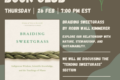
LTER Network Book Club
Love-data-week hackathon
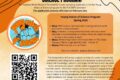
Young Voices of Science Program

Photo Contest Winners
iDigBio Webinar Series
ESIIL Innovation Summit