
The Cedar Creek LTER announced a new opportunity for synthesis groups in 2024.
Search Results for:
LTER Community Call: The power of data synthesis for understanding the effects of coastal hurricanes
September 25, 2024 @ 9:00 am-10:00 am –
The power of data synthesis for understanding the effects of coastal hurricanes
Christopher J. Patrick, Ph.D.
Associate Professor, The Virginia Institute of Marine Science, William & Mary
Hurricanes are projected to increase in frequency, intensity, and spatial coverage with climate change, however, our understanding of how and why coastal systems respond to particular hurricane events remains limited. The HERS-RCN (Hurricane Ecosystem Response Synthesis – Research Coordination Network) was created to address this need. The presentation will include the rationale for the RCN, moving the field past “my system, my storm” case studies, summarizing the network efforts so far including what has been learned through data synthesis, and describing where the research coordination network efforts are headed next.
Highlights from network research include several data stories that come from our data synthesis. These include the recent discovery that ecosystem responses to hurricanes tend to covary in terms of response size relative to stress (resistance) and recovery time relative to response magnitude (resilience), the effect that hurricane frequency has on functional diversity of coastal ecological communities, and the finding that fish community resilience to the hurricanes in the southeast United States has been declining. The presentation will also touch on recent efforts to link ecological work to the social sciences, building the responses of socio-economic systems into our conceptual framework.
Christopher J. Patrick, Ph.D., is an Associate Professor at The Virginia Institute of Marine Science, William & Mary, where he runs the Coastal & Estuarine Ecology Lab and is the Lead PI and Director of The HERS (Hurricane Ecosystem Response Synthesis) RCN (Research Coordination Network). He is also the Director of the Submersed Aquatic Vegetation Restoration & Monitoring Program at VIMS, and lead PI of MarineGEO Virginia. He has a B.S. in Behavior, Evolution, Ecology, and Systematics from the University of Maryland, College Park and a Ph.D. in Ecology from the University of Notre Dame, South Bend, Indiana. Prior to VIMS, Chris was a Research Scientist at The Smithsonian Environmental Research Center (2011-2014), an American Association for the Advancement of Science, Science & Technology Policy Fellow placed with EPA Office of Water/Office of Science & Technology (2014-2015), and an Assistant Professor of Marine Biology at Texas A&M University, Corpus Christi (2016-2019) where he developed and directed MarineGEO Texas. With over 45 peer-reviewed publications to his credit, recent relevant papers on the topic of hurricane impacts on coastal systems include papers in Estuaries & Coasts, Science Advances, Bioscience, and Frontiers in Ecology & the Environment.
REU at the Beaufort Lagoon Ecosystems LTER
REU at the Beaufort Lagoon Ecosystems LTER
Undergraduates, come gain unique experience this summer working with a BLE scientist on an ecological research project. The 10-week program starts on June 3 and ends August 9, and it comes with a $6000 stipend.
Remaining Relevant: The Hubbard Brook Online Book
As ecological trends change with a changing climate, the Hubbard Brook Online Book will continue to reflect the most current understanding of the forest ecosystem whenever it is read.
LTER Visual Media Series: Kelso Harper
April 19, 2024 @ 10:00 am-11:30 am –
Communicating science through photography and videography with Kelso Harper, Multimedia Producer at Scientific American
Friday, April 19 at 1pm ET/ noon CT/ 11 am MT/ 10 am PT/ 9 am AKT
Kelso Harper works across visual media and science journalism, from photography to podcasts to video. They currently run Scientific American’s vertical video operation. They have previously worked as a writer, producer, editor, and host for outlets like WIRED, Science, Popular Mechanics, Retro Report, and TED Ed, and has degrees in chemistry and science writing from Johns Hopkins University and MIT.
Webinar participants will also have the opportunity to submit their own work by Friday, April 12, and participate in a 30-min show-and-tell discussion. After the 1-hr lecture, participants who have submitted work will spend 30 minutes receiving feedback in a small-group setting to improve their own graphics.
A picturesque study system—notes from the SBC LTER
Whenever I jump into the blue-green surface waters and descend towards the bottom, I am reminded of the powerful, yet serene beauty of kelp forests.
New LTER initiatives broaden participation in LTER Science
The programs profiled here are only three examples of the many efforts to expand community connections, build a stronger sense of belonging, and remove obstacles to broader participation in LTER research.
Field Futures Anti-Harassment Workshop
May 14, 2024 @ 10:30 am-12:00 pm –
This FieldFutures harassment and assault prevention workshop will help participants learn to prevent, intervene in, and report incidents of sexual harassment and assault in scientific or field settings. They will also learn prevention via positive organizational climate-setting activities matters for the movement toward safe, inclusive fieldwork. Grounded in the latest evidence-based research on harassment prevention and organizational psychology, each session is designed to help participants build knowledge, competency, and self-efficacy so they can set and enforce positive norms in fieldwork settings.
These workshops are designed for LTER researchers who expect to be in leadership roles in the coming field season. This includes, but is not limited to, investigators, graduate students, postdocs, and staff.
Two dates are offered in 2024:
- Tuesday April 23 at 10:30-Noon PT (1:30-3:00 p.m. ET)
- Tuesday, May 14 at 10:30-Noon PT (1:30-3:00 p.m. ET)
Field Futures Anti-Harassment Workshop
April 23, 2024 @ 10:30 am-12:00 pm –
This FieldFutures harassment and assault prevention workshop will help participants learn to prevent, intervene in, and report incidents of sexual harassment and assault in scientific or field settings. They will also learn prevention via positive organizational climate-setting activities matters for the movement toward safe, inclusive fieldwork. Grounded in the latest evidence-based research on harassment prevention and organizational psychology, each session is designed to help participants build knowledge, competency, and self-efficacy so they can set and enforce positive norms in fieldwork settings.
These workshops are designed for LTER researchers who expect to be in leadership roles in the coming field season. This includes, but is not limited to, investigators, graduate students, postdocs, and staff.
Two dates are offered in 2024:
- Tuesday April 23 at 10:30-Noon PT (1:30-3:00 p.m. ET)
- Tuesday, May 14 at 10:30-Noon PT (1:30-3:00 p.m. ET)
Barrier Island Retreat Drives Blue Carbon Losses
Sea level rise is eroding Virginia’s barrier islands, potentially flipping carbon rich coastal ecosystems from sinks to sources.
Top Stories

Remaining Relevant: The Hubbard Brook Online Book
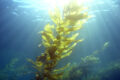
A picturesque study system—notes from the SBC LTER
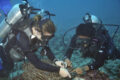
New LTER initiatives broaden participation in LTER Science
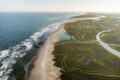
Barrier Island Retreat Drives Blue Carbon Losses

The Dock

Success Stories in Sustainability from the Southernmost Site

LTER Community Calls

Strengthen Mentoring Skills

LTER & FieldFutures Anti-Harassment Workshop
Fungal friendships