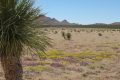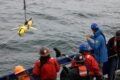
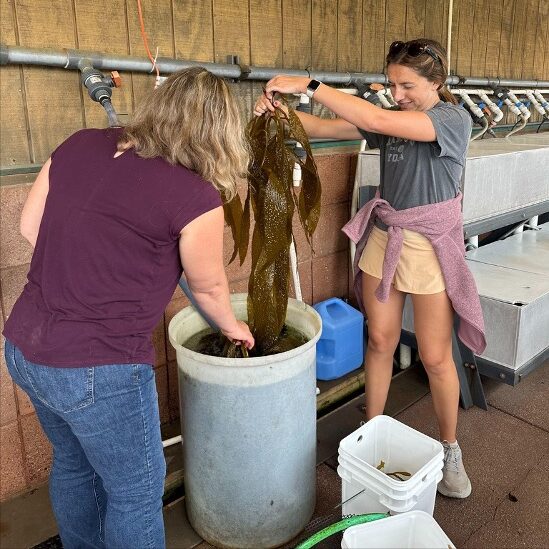
I am a middle school science teacher in Ventura County, and I got the opportunity to gain research experience at the UCSB Marine Science Institute in the Hoffman Lab during July 2024. Our team of science teachers in the summer program worked with Erin de Leon Sanchez, a Ph.D. candidate, as well as Gretchen Hoffman, a professor at UCSB, and Scott Simon, Outreach Coordinator. We got to explore local Santa Barbara and Ventura County science phenomena, such as snowy plovers, and engage in scientific research on how marine heatwaves affect sea urchin consumption of kelp.
I translated my experience into the classroom by creating a lesson series I can implement into my 6th-grade science classroom, as well as sharing pictures and my experiences with my students. I would love to eventually take my students on a field trip to UCSB to see the Research Experience & Education Facilities.
This experience impacted my teaching in three main areas. First, it reminded me of the importance of incorporating hands-on labs frequently in my classroom to engage students and enhance student learning. Next, I will have my students work with science data more frequently in our classroom. Whether it is collecting data in a lab or using science datasets, this allows my students to be curious, ask questions, and explain key scientific concepts with data. Lastly, continue adding as many local Ventura County and California phenomena to the science classroom to engage students in science and connect it to their own lives. Overall, this experience was a fun way to spend some of my summer and reminded me of the importance of always making science lessons rooted in hands-on labs and projects, data analysis, and exploration of local phenomena.
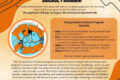
As part of her Authentic Research Experience, Paige developed 4 lesson plans that build on one another: