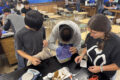
Tucked away in an industrial and warehouse zone of St. Paul, Minnesota, you will find an unsuspecting hidden gem known as Avalon School. Avalon is a project-based charter school that serves students from all over the Twin Cities metro area, and the heart of Avalon is its community connectedness. Students are assigned to an advisory, and they will grow up with their peers and their advisor throughout all four years of their high school experience. As students engage in their projects, they present at minimum one project per year to their advisory and, depending on their grade level, the greater school community. You can feel the energy and passion that is exuded from these student projects. If you can dream up a topic, odds are that an Avalon student has dabbled in it. This spirit is what drew me to the school in 2023, the summer I spent searching for my first high school teaching job after acquiring my license.
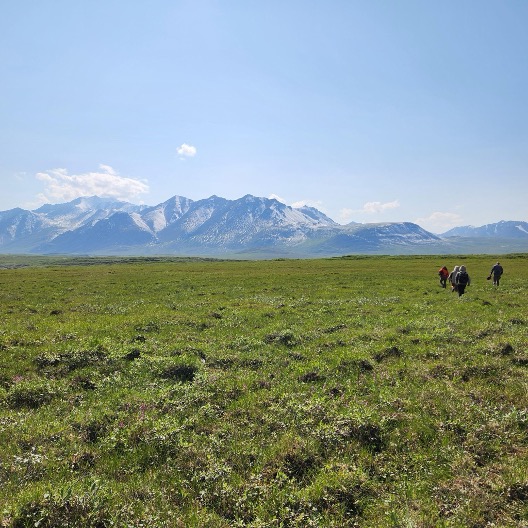
Oftentimes, my curious students would pose a question to me: “Claire, what’s your project?” The question was often met with a lame response. My head felt like it was underwater from graduate school, and I usually found myself using that as an excuse. The reality was that I didn’t know what my project was, and I wasn’t satisfied with the day-to-day of surviving the balance of work and school. When I finally reached my university’s winter break, the silence of a lack of workload felt almost deafening. Oddly enough, the rest that I had craved so much quickly turned to boredom. I wondered what I would do during the summer. How could I possibly occupy my time? What would my project be?
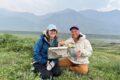
During the break, I received an email from one of my professors forwarding on a field research opportunity for the upcoming summer. Teachers could apply for this program and be sent to shadow research conducted in either the Santa Barbara Coastal, Andrews Forest, or Arctic LTERs. When my coworker and I were selected to travel to the Arctic LTER at Toolik Field Station, Alaska through the ARETs@LTER program, I was thrilled! I felt grateful to have the chance to learn more about such a unique landscape that is notoriously difficult to travel to.
So much to learn
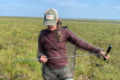
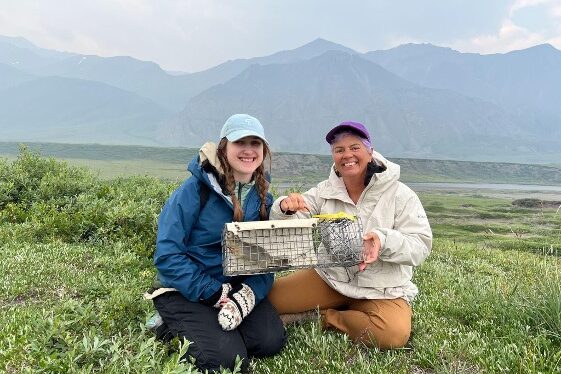
The summers of 2024 and 2025 would soon become my project. In the first summer, I shadowed through a rotation of research labs that covered a breadth of topics in only two weeks: how snow fences affect tundra plant diversity, reproduction costs in tundra plants, tundra plant species’ plasticity, how burns affect photosynthetic activity, pollinators in the tundra, investigations into the potential driver(s) of a phenomenon called shrubification, and naming and identifying tundra plant species. To put it lightly, I was overwhelmed. How could I possibly bring all of this material back to my students?
When I returned home from my Alaskan adventures the first go around, I started by reflecting on the research study that seemed to cast the widest net. My essential question for myself was “How can I pick an anchoring phenomenon for an ecology unit?” I ultimately decided on shrubification. Shrubification occurs when woody plants, such as shrubs like willow and birch, begin to rapidly expand and overtake different plant species such as tussock grasses. What intrigued me the most about this issue was that both shrubs and grasses are native to the Alaskan tundra. This contrasted the experiences of myself and my students, where there are many invasive species, like zebra mussels, that end up taking over the native ecology within Minnesota. Surprisingly, what began as a venture into teaching my students the abstract turned into something eerily familiar.
A learning journey emerges
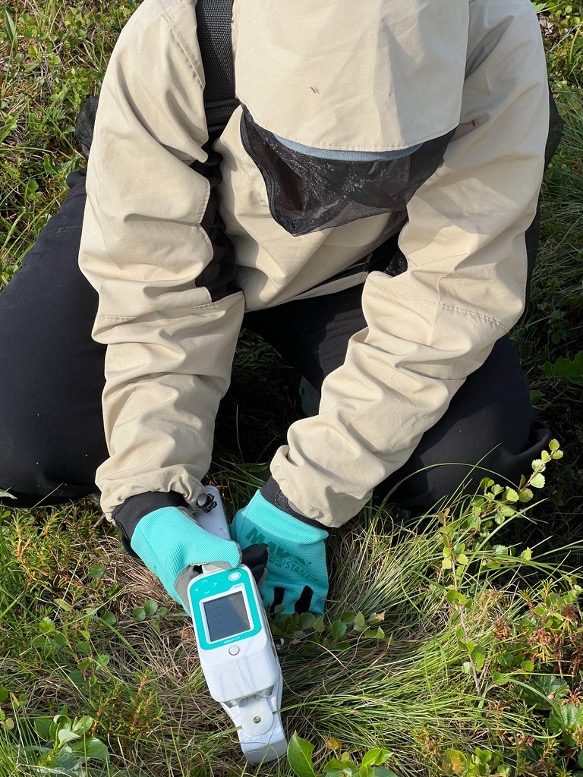
When I started my ecology unit on shrubification in my classroom, I began by asking my students what their background knowledge was about the tundra biome and Alaska as a whole. Many of my students could accurately describe the southern landscapes of Alaska, such as those near Fairbanks or Anchorage, because like parts of Minnesota, they belong to the taiga biome. However, my students struggled to describe the tundra. Some students described Antarctica while others simply felt stumped; however, almost every student could name an animal in Alaska that they cared about. Caribou, wolves, foxes, bears: all of these animals are impacted in some way by shrubification. That was my hook.
I took my students on a learning journey through the Alaskan tundra. Since it was my last unit of the school year, I did have the advantage of my students’ rapport, trust, and general interest in the project that I had conducted. Although they weren’t physically there, I was, and that was the main advantage of the lesson. My presence in Alaska served as a bridge between the abstract and the familiar. My students followed me on a sequence of lessons covering conservation and Gates of the Arctic National Park, the definition of shrubification, and how photosynthesis, permafrost thaw, resource competition, and pollinators all affect shrubification.
Connecting the Midwest with the Arctic
As my students slowly learned about and became attached to the Alaskan tundra, they wanted to know how they could advocate for change. So one day, I gave them a Science Friday podcast on shrubification in the midwestern prairies. And suddenly, after we finished listening to this podcast, a student’s hand flew into the air. He exclaimed, “Wait, this happened to my grandma!” This was the magic moment I had been waiting for. I asked him to elaborate further, and it was a breakthrough moment for my class. He reflected on his experience and confidently informed the class, “I remember visiting my grandma’s house when I was really little in the prairie, and there were grasslands everywhere. Now, when I go to visit my grandma, there’s nothing but shrubs that we just can’t seem to get rid of in her backyard.” I asked my class what this story reminded them of. They responded, “That sounds just like Alaska.”
After hearing this podcast, my students were most intrigued by the perspectives that were shared by Indigenous folks. They were surprised to hear how traditional burning and wildfires are critical to maintaining the prairie ecosystem in Minnesota because they control the rapid growth of shrubs. They also learned about the same phenomenon happening at another LTER site, the Konza Prairie, located in Kansas.
Knowledge drives action and hope
My students felt empowered to advocate for the environmental concerns that they had. They wrote letters to their representatives, and many of them received responses. While some advocated for places within Alaska or Minnesota, there were many that chose places across the country. In a time where many kids feel hopeless about the environment, we shined a light on the things we care about.
Through connecting my students to a completely different biome in an abstract place on Earth, they slowly learned that maybe the tundra isn’t so abstract after all. Rather, it’s just like their own backyards, or their grandma’s house. “This was my project,” I told my students. “Now, what’s your’s?”
Read more about participant experiences with the Authentic Research Experiences for Teachers @ LTERs (ARETS) and access the lesson plans they developed below.
Traci Kennedy
...toward the end of our unit, students were able to create their own graphs, and understand the implications of the...
Stephanie Dolan
This experience reignited my passion for working with students. Witnessing curiosity, perseverance, and the realities of field research firsthand reinforced...
Rebecca Hawk
This experience changed my teaching life! Now we learn about insects, collect insects, and identify insects...We even make our own...
Rachel Rigenhagen
...not only were we able to help contribute to the data being collected but also bring that experience back to...
Paige Shelton
I will have my students work with science data more frequently in our classroom. Whether it is collecting data in...
Melissa Moore
My students tested whether urchins kept indoors or outdoors consumed more kelp. The students got a taste of real, locally-relevant...
Kim Leslie
I fell in love with Amanda Young’s circle graph examples today. I saw them as awesome gateways for students to...
Jacob DeGroot
I translated these experiences into classroom lessons centered on data literacy, long-term datasets, and the realities of scientific research.
Emily Chittick
The biggest impact of this experience is in how I teach the process of science. While I was at the...
Claire Gunder
...what was so special about this program was that it introduced me and my students to a place in the...
Caroline McCoy
My two years as an ARETS Fellow profoundly changed how my students and I talk about science, approach a question,...