
DEB9411976 MILNE The Sevilleta Long-Term Ecological Research Program (LTER) is designed to address a suite of ecological hypotheses concerning climate dynamics and the responses of organisms in a biome transition zone in central New Mexico. The Sevilleta straddles several major biomes of the Southwest, including the Great Basin, Great Plains, and Chihuahuan Desert, and is at the epicenter of the mid-elevation Mogollon Conifer Woodland Flora. Additional ecosystems in the study region include Rio Grande riparian cottonwood forests, mid-elevation ponderosa pine forests, mid-elevation ponderosa pine forests, and higher-elevation mixed-conifer / aspen forests. The region is strongly influences by the El Nino Southern Oscillation (ENSO), with major fluctuations in precipitation on semi-decadal times scales. The major theme of the Sevilleta LTER relates to the synthetic understanding of ecological responses at various levels of organization (e.g., organismal, population, community, ecosystem, and landscape) and at multiple spatial and temporal scales. The research is organized to address (1) the role of water in the region in driving major ecosystem processes, (2) the fate of carbon as it is controlled by processes of assimilation, decomposition, and redistribution, (3) land use practices which regulate the extent and distribution of carbon processing, (4) the assembly, distribution and maintenance of biodiversity, and (5) the direct and indirect consequences of changing climatic conditions. Mathematical water balance models will provide a unifying synthesis of the LTER core topics and the various levels of organization studied by the participating investigators. The water balance approach will take advantage of continued studies from the first six years and will provide a conceptual and quantitative context for a modest number of new studies that provide a richer and more complete characterization of the Sevilleta. In addition, LTER scientists will implement a systems model of the CENTURY class in a geographical context, in which the water balance will be driven by the nonequilibrium water model. Thus, the models will provide a synthesis of existing and future data concerning the core areas of organic matter processing, primary production, and inorganic inputs. The synthesis will be of immediate use in relation to the disturbance and population core topics, including vegetation-environment relations, nutrient dynamics, species distributions and abundances, animal population studies, and population genetics. These field and laboratory studies will provide the necessary biological components that represent the contingencies and feedbacks that are both the responses to, and the constraints on, the dynamics of water.
Top Stories
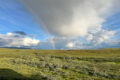
Bringing seeds of wonder and curiosity from the Arctic Circle to a Minnesota Classroom
Our second summer, we were not evacuated!

Permafrost and Passion: How Two Summers in the Arctic Reignited My Love for Teaching

LTER Community Call: Site Exchanges
2026 Synthesis Skills Course Opens
The Forest Data Jam theme is "water and climate"
NEON webinar: Towards Natural Language-based AI Agents for Environmental Data Exploration and Analysis Workflows

LTER Network Book Club
Love-data-week hackathon
Young Voices of Science Program