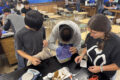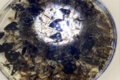
I lived and worked with researchers at The Andrews Experimental Forest. The first summer, we were evacuated after our first day due to a fire. We moved to OSU dorms and spent our time learning to identify insects under the microscope. Tatiana Latorre Beltran and Ivan Arismendi hosted us both summers and taught us so much about insects, their importance to the ecosystem, and how to collect and identify them! We learned to identify Plecoptera, Ephemeroptera, and Trichoptera. The second summer, I stayed at the Andrews Headquarters and conducted my own experiment where I collected insects twice daily with emergence traps and identified them to find patterns of emergence. One of my favorite parts of this experience was living with other researchers and learning about their studies as well! There are so many great people working hard to learn information that will impact our policies for decades into the future.
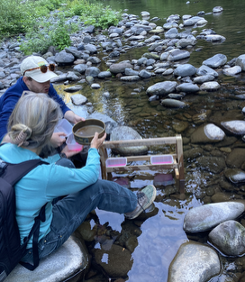
This experience changed my teaching life! Now we learn about insects, collect insects, and identify insects. We collect insects in forests that are managed through a variety of techniques (clear-cut, thinned, and old-growth) and look for patterns in biodiversity and abundance in each area. We even make our own bug costumes after we learn about insect morphology!
Additionally, just last week, I brought my middle school class to the Andrews Experimental Forest Headquarters. This was an awe-inspiring experience. We learned about the research that happens there, the beautiful art and writing that is created there, and we explored this gorgeous forest. Mark Schulze brought us to different areas to look at the soil and how it was impacted by the 2020 Holiday Farm Fire. We also were able to meet with some people who live in Blue River whose homes burned down in the 2020 Holiday Farm Fire and learn about and celebrate how they rebuilt their community.
There is newfound reverence and emphasis on research in my middle school class. I can tell them stories about the people who I have met who spend their summers climbing through dense forests, measuring and documenting every single tree in a plot. I can tell them about the researchers who masked up and went back into a fire with a ranger and firefighters to collect precious data as part of a long-term experiment. I can also tell them all about the camaraderie and sense of community among researchers. It takes so much to collect data. We must respect that process and honor the information we can learn from it. This brings students in when we look at data and work on graphing and analyzing data. They seem to have more persistence when it feels difficult and more pride when we figure something out using data that has been so lovingly collected.
Read Rebecca’s full blog post about her experience at the Andrews Forest LTER.
Rebecca’s lesson plan on Pacific Northwest forest management: