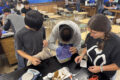
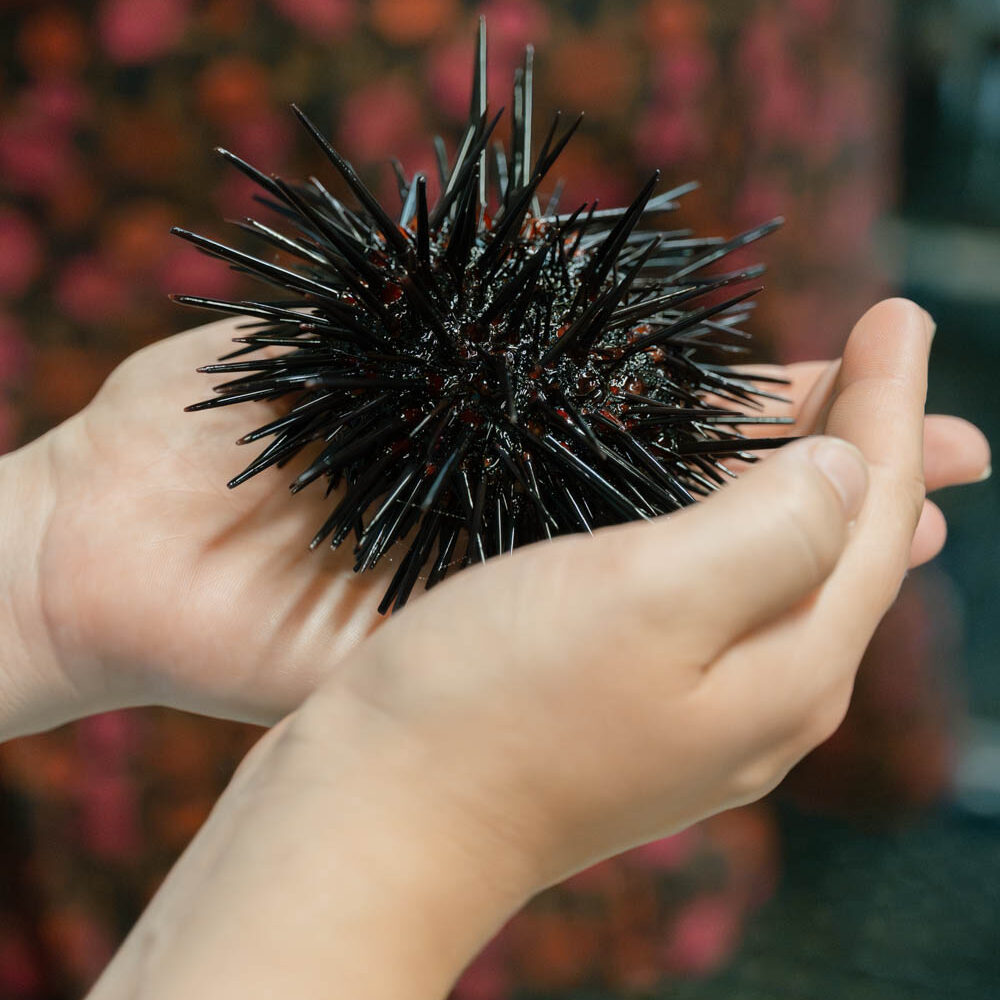
I was very fortunate to get to study at UCSB with Gretchen Hofmann, Scott Simon, and Erin de Leon Sanchez. In our experiments, we took sea urchins that were acclimated to specific temperatures. We then flipped the urchins upside down, and measured how long it took for them to right themselves- which is an important survival skill for the urchins in the wild. We found the baseline time it took at typical ocean temperatures, then slightly warmer waters, and finally, at very warm waters. We found that they became faster at the warmer waters, but once the waters became comparatively very warm, the urchins became confused, and slowed down, or even failed to flip over in the first place.
Initially, I tried to replicate the experience in my classroom. However, after several failures, I eventually just kept one urchin to show the desired behavior. The most important impacts to my classroom came not from the collection of raw data, but from the creation of graphs and interpretation of the raw data that was collected for my students. We built on these skills slowly, but toward the end of our unit, students were able to create their own graphs, and understand the implications of the data after analysis. This is a fundamental skill needed, to not only advance in the field of science, but to become a scientifically literate adult.
Read about Traci’s journey to using data nuggets in her classroom, based on her research experience.
Traci also developed a lesson plan on using Data Nuggets to build data analysis skills.