Keystone Investigations
LTER’s long-term observations are the starting point for a deep and rich set of investigations aimed at understanding the mechanisms of ecological functioning. Observations inspire experiments, which inform models, which often reveal gaps in understanding and the need for new types of observations. Inside LTER, we understand this cycle implicitly, but we have not done as well as we could in communicating it to others. It can be challenging to discern which are the key investigations at each site, how they build over time, and how they relate to each other across sites.
To remedy this issue, the LTER Network Office is assembling a set of keystone investigations that help visitors to the Network website draw connections across sites and that best represent the mechanistic research that is LTER’s greatest strength. Ideally, each site will contribute about 5 examples of your most important work. Newer sites may have fewer; longer-running sites may have more. They do not need to be manipulative experiments, but they should be substantial studies.
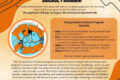
Planned presentation: Each Keystone Investigation would be presented on its own “card” with an image, name, and brief description plus indicators for core area, nature of study, and study system. Those cards would link to a post with additional information such as key papers, datasets, and related models. All of the keystone investigations could be searched by core area, study system, and category of investigation.