
Search
2005.
“Population size and fire intensity determine post-fire abundance of grassland lichens”
8: 193-198.
2005.
“Opposite relationships between invasibility and native species richness at patch versus landscape scales”
109: 81-88.
2005.
“Linking ecosystem and parasite ecology”
: 13-21.
2005.
“Nitrogen/Phosphorous leaf stoichiometry and the scaling of plant growth”
80: 636-642.
2005.
“Do individual plant species show predictable responses to nitrogen addition across multiple experiments?”
110: 547-555. doi:E001.
2005.
“Global biogeography of plant chemistry: filling in the blanks”
168 (263-266): .
2005.
“Species invasions and the relationships between species diversity, community saturation, and ecosystem functioning”
: 41-64.
2005.
“Functional- and abundance-based mechanisms explain diversity loss due to N fertilization”
102: 4387-4392.
2005.
“Ecosystem goods and services and their limits: The roles of biological diversity and management practices”
: 78-97.
2005.
“Diversity, productivity and temporal stability in the economies of humans and nature”
49: 405-426.
2005.
“Linking leaf and root trait syndromes among 39 grassland and savannah species”
167: 493-508.
2005.
“Legume species identity and soil nitrogen supply determine symbiotic nitrogen-fixation responses to elevated atmospheric [CO2]”
523-530: . doi:E141.
2005.
“Assessing the generality of global leaf trait relationships”
166: 485-496.
2005.
“Modulation of leaf economic traits and trait relationships by climate”
14: 411-421.
2005.
“Foliar respiration acclimation to temperature and temperature variable Q10 alter ecosystem carbon balance”
11: 435-449.
2006.
“Non-neutral patterns of species abundance in grassland communities”
9: 15-23. doi:E001 E014 E111.
2006.
“Diversity and distribution of Victoria Land biota”
38: 3003-3018. doi:LTER.
2004.
“Species and functional group diversity independently influence biomass accumulation and its response to CO2 and N”
101: 10101-10106. doi:E141.
Top Stories
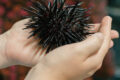
What have sea urchins got to do with climate change?
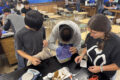
Returning Home to California’s Kelp Forests
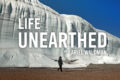
McMurdo and Konza featured in PBS Series
Natural Areas Conference Call for Proposals

Request for Synthesis Proposals 2026
Hunting for Biocrusts: The living skin of the earth
Our second summer, we were not evacuated!

2026 Synthesis Skills Course Opens

Site Exchanges 2026

Permafrost and Passion: How Two Summers in the Arctic Reignited My Love for Teaching
