BNZ_Link_Vegplot
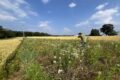
The author uses vegetation plots to study which species return first in cut Black Spruce forests.

The author uses vegetation plots to study which species return first in cut Black Spruce forests.
The dense Black Spruce forests at the Bonanza Creek LTER—Christmas Trees, if you will.
“Bambi” the decommissioned military tanker truck and Konza Prairie’s hardest worker (artistic liberties taken).
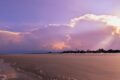
A view from the Konza Prairie Biological Station at dusk.
Nina Ferrari and Mark Schulze pack up equipment at a tree instrumented for bird surveys at the Andrew’s Forest. Nina’s graduate student work has trees instrumented across the forest, many of which burned in the Lookout Fire.
A Crown of Thorns Seastar eats a coral, leaving behind a bleached skeleton. The Seastars graze selectively, eating some species before others, but eventually consume most of the live coral on the reef.
Crown of Thorns Seastars next to a partially bleached coral. The seastars can only eat what they can access, leading to the bleached coral ends and living interior.
Aerial photo showing part of the Andrews Forest after the Lookout Fire. The mixed severity burn is fairly representative of the historical fire regime in the area.
Diversity of annual row cropping systems in LTAR ACSE in July 2023. Sustainably Intensified: a) Soybean, b) Winter wheat, c) Winter canola, d) Forage, e) Corn, f) Restored prairie. Conventional: g) Soybean, h) Corn.
Aerial view of the Long-Term Agroecosystem Research (LTAR) Aspirational Cropping Systems (ACSE) located at the Kellogg Biological Station LTER in Southwest Michigan being sampled with malaise traps in July 2023.