
Long-Term Ecological Research on north temperate lakes is a comprehensive study of seven lakes and the surrounding landscape in northern Wisconsin. The study is designed to answer research questions spanning longer time and broader space scales than typical of ecological research. Thus, it is especially relevant to analyzing global change and regionalizing site specific knowledge. There are five interrelated research areas: 1) perception of long-term trends, 2) interactions among physical, chemical, and biological processes, 3) temporal responses to disturbance and stress, 4) relation between spatial heterogeneity and temporal variability, and 5) generalization of results to a landscape scale. A comprehensive data collection and management system is in place to address these areas and make data available to the broader scientific community. Climatic, hydrologic, and terrestrial forcing on lakes is analyzed along with internal processes determining the dynamics of biogeochemical cycling, production, and species abundances. Disturbances/stresses being evaluated include species invasions, climate warming, and acidic precipitation. Spatial heterogeneity and scale are studied as influences on temporal variation in, and perceptions of, lake systems. Spatially explicit models of regional hydrology and water quality are being implemented. Dynamics of lakes are compared with other ecosystems types, inside and outside the LTER network.
Top Stories
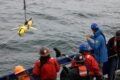
Lessons Learned from Spending a Month at Sea
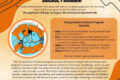
Young Voices of Science: 2026 applications open

Call for proposals: Global ILTER Activity 2026
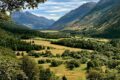
Call for Proposals: 4th ILTER Open Science Meeting (OSM) 2027

Reminder: Synthesis RFP deadline September 16

LTER at ESA, 2026
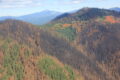
Studying post-fire Snowpack at the H.J. Andrews Experimental Forest

2026 Site Exchanges Announced
The caddisfly stole my heart

Shirah Strock | Virginia Coast Reserve LTER to Santa Barbara Coastal LTER