
The semiarid Great Plains of North America is an extensive area, and has particular importance for natural resource production. The Central Plains Experimental Range (CPER) has an excellent location in the central Great Plains to represent the important long-term ecological issues of consequence for much of the region. The organizing concept for this long-term study of the shortgrass steppe is that the major controls over ecosystem structure and function are climate, geomorphology, and landuse management. Each of these controls has important spatial and temporal heterogeneity across a range of scales, and exerts its influence at a particular combination of levels. It is hypothesized and that the most important controls at the site level of the CPER are soil texture and landuse. Soil texture is a major influence over soil water availability, and thus vegetation structure, net primary production, and decomposition. Landuse sets the equilibrium state of ecosystems by controlling potential production and soil organic matter reserves. This project continue current work and initiate new studies to further examine the influence of soil texture and landuse over shortgrass ecosystem structure and function using field experimental research, simulation, and regional analysis.
Top Stories

Lessons Learned from Spending a Month at Sea
Young Voices of Science: 2026 applications open

Call for proposals: Global ILTER Activity 2026
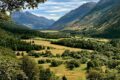
Call for Proposals: 4th ILTER Open Science Meeting (OSM) 2027

Reminder: Synthesis RFP deadline September 16

LTER at ESA, 2026
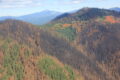
Studying post-fire Snowpack at the H.J. Andrews Experimental Forest

2026 Site Exchanges Announced
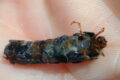
The caddisfly stole my heart

Shirah Strock | Virginia Coast Reserve LTER to Santa Barbara Coastal LTER