Cameron Clay will visit Luquillo (LUQ) LTER to learn how to install, process, and analyze minirhizotron monitoring systems working with Dr. Tana Wood and Laura C. Rubio Lebrón. He will install these systems, which measure root traits in situ, into an existing throughfall exclusion experiment at Luquillo. He will also work on processing and analyzing samples on-site, which will improve understanding of the impact of drought in tropical forests after a hurricane-induced disturbance. Returning to the Minneapolis St. Paul (MSP) LTER, where he is based, Cameron will continue to work with the LUQ team to process and analyze a backlog of minirhizotron data.
At MSP, Cameron will deploy a minirhizotron system into an existing floodplain forest experiment. The skills he gains in Puerto Rico will allow for the creation of parallel projects at these two LTER sites to test how extreme fluctuations in soil moisture affect root traits. The site exchange will serve to bring these geographically disparate places closer together and enable joint analyses that address important questions in disturbance ecology as well as building the recipient’s professional network and skills.
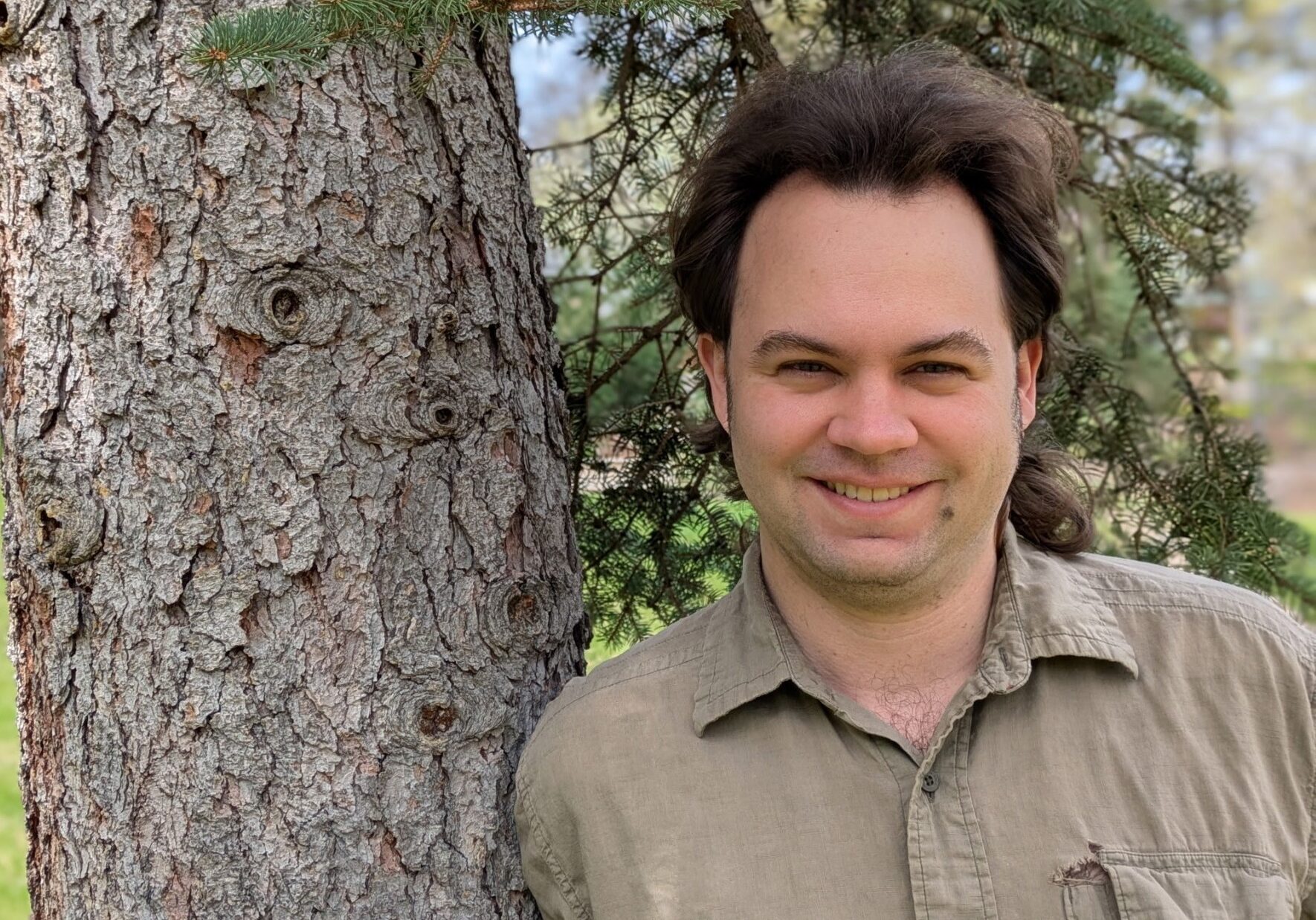
Cameron Clay (he/him) is a current PhD student at the University of Minnesota, studying disturbance impacts to forested ecosystems. He graduated from Virginia Commonwealth University with his M.S. in Biology in 2021, and his B.S. in Evolution, Ecology and Biodiversity from the University of California, Davis in 2017. Between his M.S. and his PhD, he spent time as a post-M.S. researcher at the National Autonomous University of Mexico, Ciudad Universitaria Campus, Mexico City. He grew up in Encinitas, California.