
The Coweeta Hydrologic Lab Long-Term Ecological Research Project was one of six original LTER projects established in 1980. Nestled in the Southern Applachian Mountains in western North Carolina, the field site is built upon a long history of U.S. Forest Service watershed manipulations and water quality and quantity monitoring dating from the early 1930s. Historically, Coweeta research focused on the vegetation and soil processes that explain the responses to the various watershed manipulations, including forest-to-grassland inter-conversions, conifer-to-hardwood forest inter-conversions, thinning, clearcutting, and other silvicultural practices. The proposed research would continue the long-term measurements, field experiments and interdisciplinary modeling from the small watershed studies, while extending them to the regional scale so as to account for increases in resource demand and competition from adjacent and more distant areas. Focus will remain on the provisioning ecosystem service of water quantity, the regulating service of water quality, and the supporting service of maintaining biodiversity. This extension is justified on the basis that landscapes in the southeastern U.S. are expected to change profoundly in the next five decades as the socioeconomic factors driving the dramatic exurbanization of the past three decades persist, while changes to the rates, frequencies and intensities of important climatic factors occur.
Top Stories
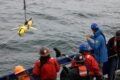
Lessons Learned from Spending a Month at Sea
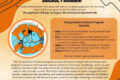
Young Voices of Science: 2026 applications open

Call for proposals: Global ILTER Activity 2026
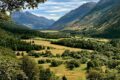
Call for Proposals: 4th ILTER Open Science Meeting (OSM) 2027

Reminder: Synthesis RFP deadline September 16

LTER at ESA, 2026
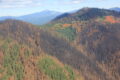
Studying post-fire Snowpack at the H.J. Andrews Experimental Forest

2026 Site Exchanges Announced
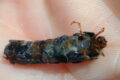
The caddisfly stole my heart

Shirah Strock | Virginia Coast Reserve LTER to Santa Barbara Coastal LTER