Site Contacts
Site Details
- Ecological Impacts of urban contaminants
- Resilience of urban forests
- Effectiveness of pollinator habitat
- Functioning of urban watersheds
- Impacts on urban lakes and streams
- Coupling between urban nature investments and wealth
- Governance of environmental policies and practices
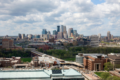
The Minneapolis-St. Paul Metropolitan Area Long-Term Ecological Research Program (MSP LTER) is an urban LTER site studying how urban stressors, such as climate change, pollutants, invasive species, and habitat fragmentation, affect the ecological structure and functioning of urban nature, including pollinators, forests, watersheds, and surface waters. We also study how residents interact with and experience the benefits and burdens of urban nature, aiming to better understand urban nature and related policies and practices toward improving environmental outcomes for all residents.
The MSP LTER brings together over 100 researchers, educators, students, artists, and community organizers from the University of Minnesota, University of St. Thomas, USDA Forest Service, and other local to national institutions. Guided by the practice of community-engaged research, we partner with dozens of community and agency/government partners throughout the Twin Cities Metro Area to conduct our work.
Read MoreThe Minneapolis-St. Paul Metropolitan Area Long-Term Ecological Research Program (MSP LTER) is an urban LTER site studying how urban stressors, such as climate change, pollutants, invasive species, and habitat fragmentation, affect the ecological structure and functioning of urban nature, including pollinators, forests, watersheds, and surface waters. We also study how residents interact with and experience the benefits and burdens of urban nature, aiming to better understand urban nature and related policies and practices toward improving environmental outcomes for all residents.
The MSP LTER brings together over 100 researchers, educators, students, artists, and community organizers from the University of Minnesota, University of St. Thomas, USDA Forest Service, and other local to national institutions. Guided by the practice of community-engaged research, we partner with dozens of community and agency/government partners throughout the Twin Cities Metro Area to conduct our work.
The MSP LTER aims to determine the long-term coupled dynamics of the urban social system and urban nature in the face of rapid environmental and social change. We examine this coupling across organizational scales of urban nature that range from diverse organisms in habitat patches to stream and stormwater drainage networks to landscapes with abundant surface water. Within the urban social system, we consider organizational scales ranging from diverse individuals acting in groups to numerous municipalities to complex governance systems and institutions within the metropolitan region. These include seven counties and 33 watershed management entities, and the Metropolitan Council (a metro-wide governing body).
Embedded in our conceptual framework are four overarching research questions across MSP’s ecological and social system:
- How does biodiversity of urban nature interact with the broader biophysical, social, and technical contexts to mediate response of long-term ecological structure and function to urban stressors?
- How do the ecological structure and function of urban nature interact with social and technical factors to influence urban climate, hydrology, and water quality of watersheds and lake ecosystems over annual to decadal timescales?
- How are decisions about urban nature, community wealth, and well-being coupled over space and time; how can governance institutions be changed such that environmental outcomes and human well-being are improved for all urban residents?
- How can long-term social-ecological research engage with different urban communities to achieve meaningful scientific and community outcomes for all communities?
First funded March 15, 2021
Location
Grant History:
LTER: The Changing Nature of Cities: Ecological and Social Dynamics in the Minneapolis-St. Paul Urban Ecosystem
Start Date: March 15, 2021