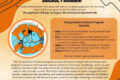

Brittany Washington, a PhD student with the Baltimore Ecosystem Study, will visit the two LTER urban sites: Central Arizona-Phoenix (CAP) LTER and Minneapolis-St. Paul (MSP) LTER to become familiar with groundwater connectivity and how it is assessed at these two very different LTER sites.
Brittany will spend 2-3 days at each site conducting focused discussions with investigators and graduate students on existing long-term hydrologic and water quality datasets, LiDAR-based geomorphic mapping approaches, and site-specific incision or channel condition metrics. She’ll also visit field sites to view representative streams, lakes, engineered channels, or constructed wetlands and directly observe dominant connectivity pathways. Laboratory visits at each site will offer detailed understanding of analytical workflows and monitoring infrastructure. Finally, she’ll present her own work and that of BES colleagues on groundwater connectivity and nutrient shifts in the Baltimore area.
The exchange will supports the regional comparative chapter of Brittany’s dissertation, which evaluates how hydrologic connectivity and nutrient dynamics differ across three urban LTER sites. It will also strengthen cross-site integration within the LTER Network and support one of the first structured multi-city comparative analyses of hydrologic connectivity and urban nutrient dynamics.
Brittany Washington is a PhD candidate in Earth and Environmental Sciences at the CUNY Graduate Center and the Advanced Science Research Center, where she is advised by Professor Peter Groffman. Her research examines how hydrologic connectivity shapes nutrient dynamics in urban watersheds. She studies how water movement controls when and where nutrients move through urban watersheds, and how these patterns differ across climate, land use, and infrastructure. Through the LTER Site Exchange, she is conducting a comparative analysis across Baltimore, Phoenix, and Minneapolis–St. Paul to evaluate how connectivity operates in different urban systems.