Dr. Nicholas Medina will travel to the Minneapolis-St. Paul (MSP) LTER and sample soils for eDNA extraction and Internal Transcribed Spacer (ITS) sequencing. The results will complement MSP data on tree distribution, soil nutrients, heavy metals, and earthworms, while expanding Nicholas’ work on the temporal dynamics of mycorrhizal fungal exploration traits.
This exchange will help establish a connection between analogous projects in Chicago and Minneapolis areas, specifically focused on soil functioning and microbial biodiversity, about which only some studies exist broadly and among urban LTER projects. Recent studies in other cities have focused on urban-rural gradients, but fewer studies address within-city heterogeneity in species composition. This work expands on Nicholas’ recent postdoctoral work on temporal dynamics of mycorrhizal fungal exploration traits and applies this to spatial dynamics in heterogeneous cities.
The MSP-LTER team already has recent data on urban tree canopies including street and forest patch trees and their significant predictors, as well as sampling sites for ongoing soil nutrient, heavy metal, and earthworm analyses. Nicholas will add to these datasets with complementary soil sampling for subsequent eDNA extraction and ITS sequencing for ectomycorrhizal and some arbuscular mycorrhizal fungal species, with map-based site selection focused on oaks across areas with varying total tree canopy, and also subset by land cover — namely parks, residential areas, and street soils. This approach could be scaled to other US cities, ultimately establishing an approach to test above-belowground connections among tree cover, soil nutrients, and associated microbiome responses.
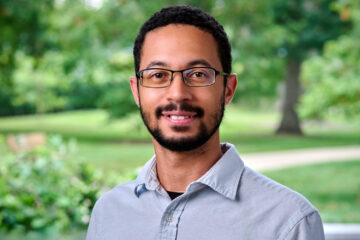
Dr. Nicholas Medina is a postdoctoral researcher at the Morton Arboretum, where he researches belowground habitats, focusing on how and why communities of fungi in symbiosis with roots change over time and across host tree species.
Nicholas’ research investigates how fungi align with tree and forest phenology, or patterns in the peak timing of tissue growth. Understanding when fungi are most productive helps researchers understand how trees grow, allocate resources, and promote long-term carbon storage in soils. His interest in environmental science was ignited during a study abroad program in the Caribbean exploring biodiversity conservation. Since then, Nicholas has led diverse research projects across forestry, soil science, agriculture, and microbiology in temperate, tropical, and urban environments.