Grace Cawley will travel from the California Current Ecosystem (CCE) LTER to the Northeast Shelf (NES) LTER to conduct field and laboratory work with scientists at Woods Hole Oceanographic Institution. She will draw on protocols developed within the California Current Ecosystem LTER to explore how NES zooplankton sampling can be extended to support size-resolved and image-based analyses.
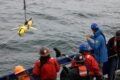
During an NES research cruise, she will participate in net deployments and sample processing while applying CCE approaches for handling fragile taxa and resolving biomass across size classes. She will work with the NES team to test the addition of a formalin-preserved fraction suitable for imaging and evaluate how this integrates with existing workflows. Grace will assess how preservation, subsampling, and handling influence estimates of biomass and community composition and how these compare with CCE datasets.
In the lab, she will prepare NES samples through ZooScanning, applying subsampling and split protocols informed by CCE workflows. If time allows, she will work with a postdoctoral researcher to apply an image analysis pipeline and develop a labeled training set that improves representation of under-resolved taxa, including gelatinous zooplankton.
Outcomes will include a documented workflow adapted for NES samples and an initial labeled image dataset. This work will support alignment of zooplankton observations between NES and CCE and enable future cross-site comparisons of size structure and community composition. Grace aims to build long-term collaborations within the LTER Network and expand her professional connections to support future cross-site research.
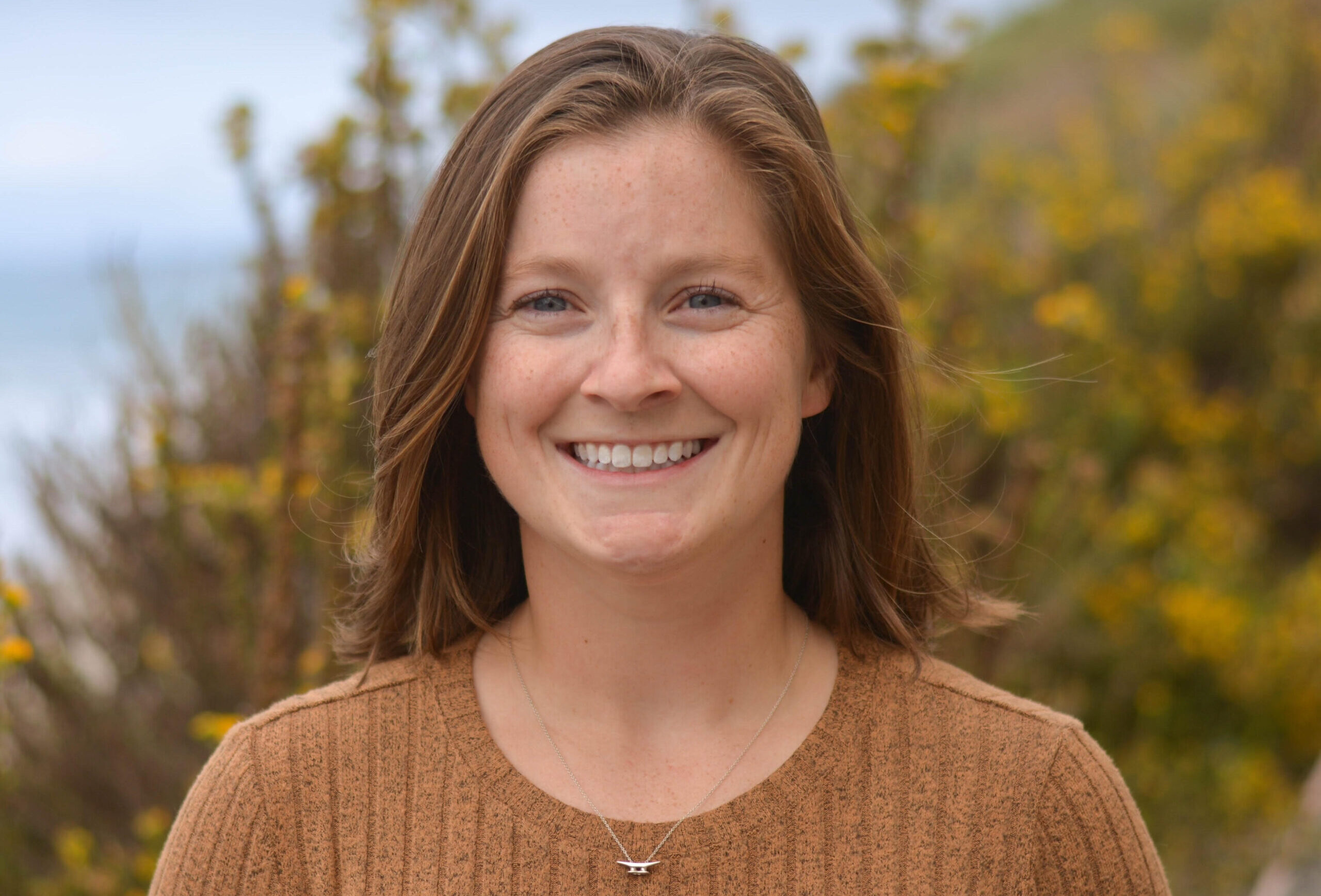
Grace studies gelatinous zooplankton and their role in marine ecosystems, with a particular focus on pyrosomes in the California Current Ecosystem. Her research investigates the increase of pyrosomes over the past decade and the cascading effects on trophic interactions and ocean biogeochemistry. Using approaches that span field and laboratory observations, long-term ecological time series, image analysis, and the development of convolutional neural networks (CNNs), she explores ecological questions across scales, from individual organisms to ecosystem-wide processes, and the dynamic connections among them.