
9632852 Burke The shortgrass steppe (SGS) occupies the middle of the productivity gradient along which the LTER grassland sites lie. It is unique among North American grasslands for its long evolutionary history of intense selection by both drought and herbivory, leading to an ecosystem that is very well adapted to withstand grazing by domestic livestock. The distinctive features of the SGS are both its vegetation and the concentration of biological activity and organic matter belowground. The vegetation of the SGS is characterized by low-growing plants that are either tolerant or resistant to grazing and drought. The large concentration of biological activity belowground reflects the distribution of plant production and the enhanced rates of energy flow through heterotrophs belowground. It is also explained in part by the fact that most biologically active elements in grasslands are protected from natural disturbances by being stored in soil organic matter. The SGS LTER project has been in operation since 1982 and currently supports 46 long-term experiments, numerous short-term experiments, and has a large emphasis on integrative simulation analysis. SGS LTER work is divided into five major areas: populations and processes, biogeochemical dynamics, paleoecology and paleopedology, water and energy dynamics, and disturbances. In addition, the SGS is involved in many synthesis activities which will soon be summarized in a synthesis volume. One of the unique aspects of this research program is the emphasis on integrating knowledge about SGS ecosystems into simulation models. These models are used widely, and they will continue to serve as a mean of integrating ideas and developing hypotheses for future research in the SGS LTER program.
Top Stories
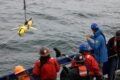
Lessons Learned from Spending a Month at Sea
Young Voices of Science: 2026 applications open

Call for proposals: Global ILTER Activity 2026
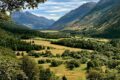
Call for Proposals: 4th ILTER Open Science Meeting (OSM) 2027

Reminder: Synthesis RFP deadline September 16

LTER at ESA, 2026
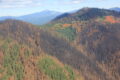
Studying post-fire Snowpack at the H.J. Andrews Experimental Forest

2026 Site Exchanges Announced
The caddisfly stole my heart

Shirah Strock | Virginia Coast Reserve LTER to Santa Barbara Coastal LTER