
Search
2006.
“Mapping Height and Biomass of Mangrove Forests in Everglades National Park with SRTM Elevation Data”
72 (3): 299-311.
2009.
“Photochemical alteration of 3-oxygenated triterpenoids: Implications for the origin of 3,4-seco-triterpenoids in sediments”
74: 543-550.
2010.
“Lake metabolism and the diel oxygen technique: State of the science”
8: 628-644. doi:10.4319/lom.2010.8.0628.
2009.
“Determining Spatial and Temporal Inputs of Freshwater, Including Submarine Groundwater Discharge, to a Subtropical Estuary Using Geochemical Tracers, Biscayne Bay, South Florida”
32 (4): 694-708. doi:10.1007/s12237-009-9155-y.
2006.
“Interaction of hydrology and nutrients in controlling ecosystem function in oligotrophic coastal environments of South Florida”
569 (1): 1-2. doi:10.1007/s10750-006-0118-z.
2006.
“Relationships between hydrology and soils describe vegetation patterns in seasonally flooded tree islands of the southern Everglades, Florida”
279 (1-2): 271-286. doi:10.1007/s11104-005-2362-9.
2012.
“Diel and seasonal variation in the use of a nearshore sandflat by a ray community in a near pristine system”
63: 1077-1084. doi:10.1071/MF11226.
2006.
“Ectoenzyme kinetics in Florida Bay: Implications for bacterial carbon source and nutrient status”
569 (1): 113-127. doi:10.1007/s10750-006-0126-z.
2008.
“Indirect hurricane effects on resource availability and microbial communities in a subtropical wetland – estuary transition zone”
31 (1): 204-214.
2014.
“Cross-fertilizing aquatic and terrestrial research to understand predator risk effects”
1 (5): 439-448. doi:10.1002/wat2.1039.
2014.
“Assessing dissolved organic matter dynamics and source strengths in a subtropical estuary: Application of stable carbon isotopes and optical properties”
92: 98-107. doi:10.1016/j.csr.2014.10.005.
2012.
“Estimates of groundwater discharge to a coastal wetland using multiple techniques: Taylor Slough, Everglades National Park, USA”
20: 1651-1668. doi:10.1007/s10040-012-0907-6.
Top Stories
Call for Abstracts: 4th ILTER Open Science Meeting (OSM) 2027
Global, All-Virtual Ecology Conference
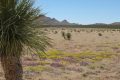
Themed Collection on North American Drylands
2026 Photo Contest
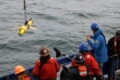
Lessons Learned from Spending a Month at Sea
Young Voices of Science: 2026 applications open

Call for proposals: Global ILTER Activity 2026
Call for Proposals: 4th ILTER Open Science Meeting (OSM) 2027

Reminder: Synthesis RFP deadline September 16
LTER at ESA, 2026
