Committee Function:
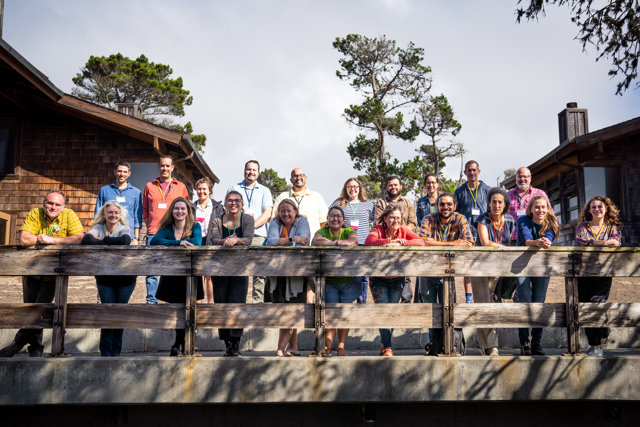
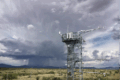
Credit: Gabriel de la Rosa. CC BY-SA 4.0
2025 Accomplishments
- Completed and shared results of the Network-wide climate and culture survey
- Collaboration with graduate student committee, leading to production of a best practices document for recruiting and retaining outstanding talent in the LTER Network
- Contributed to Network-wide Entering Mentoring training and mentoring communities-of-practice
- Supported development of a Network-wide resource library
- Hosted external speakers:
- Katie Jones, Indigenous plant ecologist with NEON, joined for data sovereignty discussion
- ADVANCEing Field Safety team joined for discussion of how LTER could contribute to their program development in exchange for free training
2024 Accomplishments
Continued regular collaborative conversation with NSF Program Officers
- Opportunity to leverage LNO to affect change in inclusion across LTER Network, resulting in funding for a full-time network-level Inclusion and Access Coordinator position to facilitate safety and community-building activities and their assessment.
- Provided feedback to NSF’s interest in enhancing inclusion across the Network, resulting in language requiring a commitment to broadening participation in the most recent LTER renewal solicitation.
The committee regularly meets monthly
- Meetings consist of discussion of topics that are of concern at our individual sites, guest presentations that are relevant at the network level, and updates from separately-meeting working groups.
Working groups established separate meetings and accomplishing specific tasks
- By working independently outside of the monthly committee meetings, progress on multiple issues can occur at a faster pace.
- This setup also allows for more focus toward specific goals and tasks to accomplish goals.
- A cross-site collaborative RaMP proposal was submitted.
- A successful series of accessible community-building online seminars took place and more are being planned.
- Shared resources allowed for a greater push for sites to incorporate effective codes of conducts.
- Shared living spreadsheet for LTER-wide aggregated field and safety plans was created.
2024 Active Subcommittees
Field and Community Safety. The Field Safety WG facilitates the production of effective, inclusive field safety plans at each site across the network. As the new NSF supplement requirement for each LTER to submit a Plan for Safe and Inclusive Field/Vessel/Aircraft Research goes into effect this WG will be focused on helping sites fulfill this requirement using best practices.
Community-Building. The Community-Building WG is creating networks of community for scientists from all backgrounds across LTER sites, leveraging the network to provide the critical mass needed for a sense of community for LTER folk who might otherwise struggle to find such an environment in their home site.
Fundraising. The Fundraising WG collects and disseminates funding opportunities for safety, engagement, and team-building efforts that are well-suited to the strengths of LTERs or the LTER Network, and also facilitates multi-site proposals in response to relevant calls for proposals.
2022 All Scientists’ Meeting
The Committee organized several workshops at the 2022 LTER All Scientists’ Meeting, including:
- LTER Indigenous Land Acknowledgement & Community Partnership
- A tool kit to support inclusive mentoring practices
- Planting Seeds: Stories of Diversity & Justice at LTER Sites
- Recruiting and Supporting Beginning Scientists
- Cultivating Systemic Change in DEIJ at LTER Sites
At the All Scientists’ Meeting in 2022, the committee also revisited the working group structure and issued a new call for participation from researchers and staff across the Network, in addition to the current site representatives. Committee working groups for 2022 are:
- Resources. The Resources WG collects resources and best practices from the literature as well as from efforts undertaken across the Network (like codes of conduct, diversity statements, land acknowledgments, etc.), and facilitates cross-site information sharing by disseminating those resources to individual sites. 2022 Leadership: Sarah Roy and Lindsey Kemmerling
- Field and Community Safety. The Field Safety WG facilitates the production of effective, inclusive field safety plans at each site across the network. As the new NSF supplement requirement for each LTER to submit a Plan for Safe and Inclusive Field/Vessel/Aircraft Research goes into effect this WG will be focused on helping sites fulfill this requirement using best practices. 2022 Leadership: Renee Brown and Mariah Patton
- Community-Building. The Community-Building WG is creating networks of community for scientists from all backgrounds from across LTER sites, leveraging the network to provide the critical mass needed for a sense of community for LTER folk that might otherwise struggle to find such an environment in their home site. 2022 Leadership: Cristy Portales, Joe Tumber-Davila, and Bia Dias
- Fundraising. The Fundraising WG collects and disseminates funding opportunities for safety, workforce development, and team-building efforts that are well-suited to the strengths of LTERs or the LTER Network, and also facilitates multi-site proposals in response to select calls (REST, RaMP). 2022 Leadership: Lydia Zeglin and Nancy Grimm
- Addressing complaints, conflicts, and inter-personal issues. Being inclusive requires having ways to address the inevitable conflicts and problematic behavior that occurs within a community. This committee focuses on the range of complaints not covered by Title VI or IX. It aims to assemble information on the approaches currently in practice across the network, and explore creative solutions to fraught interpersonal dynamics. 2022 Leadership: Lydia Zeglin and Nancy Grimm
- Climate and Culture Surveys. The Climate and Culture Surveys WG is collecting best practices for assessing the climate for inclusion at field stations, with the goal of facilitating network-wide climate surveys that can be tailored to individual sites.
- Assessment. The Assessment WG is collecting methods for evaluating broadening participation efforts in a quantitative manner that fit NSF’s desire for best-in-class programs to with effective methods for assessing their progress towards their stated objectives. 2022 Leadership: Jenn Bowen
Activities 2020-2022:
- In addition to a leadership team, committee activities were organized around 4 main topics:
- Community-building activities – LTER researchers from a variety of underrepresented backgrounds presented short scientific presentations, followed by networking time — building community and mutual support across sites. the space was explicitly held as a space for those who identify as underrepresented, not as a learning space for allies.
- Developing shared resources – continued to build out the LTER resources library and the broadening participation resource of the month newsletter section.
- Seeking funding – Explored potential funding sources and programs, built connection with existing, funded groups (ESA, AdvanceGeo and others).
- Field safety – Gathered and shared field safety plans across sites.
- Worked with the LTER Network Office to support training and planning activities, including:
- Meetings with Lead PIs in December 2020 and May 2021 to develop common understanding and shared strategy around DEI
- Bystander intervention training in November 2020
- Science Council broadening participation activities in May 2022
Activities 2016-2019:
- Organized session at LTER ASM to share resources, best practices, challenges and opportunities.
- Supported sites in considering development of Diversity Plans.
- Argued, successfully, for the establishment of a standing Diversity Committee for LTER.
- Conducted a network wide student survey, produced a report and presented it at the LTER Science Council.
- Provide LNO support in their efforts to survey participants in LTER Synthesis Working Groups.