LTER Community Call: Resilience, Resistance, Climate, and Production

October 14, 2026 @ 9:00 am-10:00 am –
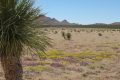
We’ll hear from 2 synthesis groups focusing on resilience in (primarily) grassland systems. One group, “Resilience of Productivity”, was funded through the LTER Network Office. The other “Grassland Rocks” is a grad-and postdoc-led group capitalizing on the proximity of three grassland sites. Please join us to hear what they’ve each learned and where they are headed next.
- Assessing the resilience of productivity to climate variability across management and climate gradients
- Grassland Rocks: Ecology Letters paper: Multiple Community Properties Drive Ecosystem Resistance and Resilience to Extreme Climate Events Across Mesic Grasslands
-
“Grassland Rocks” is a working group of early-career researchers across LTER sites investigating ecosystem resistance and resilience to extreme climate events. We used nearly 40 years of data from naturally-assembled grassland plant communities at Cedar Creek, Kellogg Biological Station, and Konza Prairie LTER sites to test the relative importance of species richness, evenness, and dominance on ecosystem resistance and resilience to extreme wet and dry events. We found that species richness was important for resistance to extreme dry events, dominance was important for resistance to extreme wet events, and without fertilization, evenness was important for resilience to extreme dry events. We also found that nutrient addition altered resistance and resilience indirectly by decreasing species richness and increasing dominance. Additionally, species richness and dominance were directly reduced by extreme climate events, potentially eroding resistance and resilience to future events. Our results show that species richness, evenness, and dominance are all important for ecosystem resistance and resilience—there is no one silver bullet to maintain stability for all global change scenarios.ReferenceAjowele, J.A., Darst, A.L., Baker, N.R., Brenneman, R.R., Broderick, C., Cappelli, S.L., Liang, M., Linabury, M., Nieland, M.A. Parker-Smith, M., Pehim Limbu, S., Terry, R.S., Young, M.L., Zaret, M., Zaricor, M. (2026). Multiple Community Properties Drive Ecosystem Resistance and Resilience to Extreme Climate Events Across Mesic Grasslands. Ecology Letters 29(4), e70380. https://doi.org/10.1111/ele.
70380.
-