
Search
2005.
“A large landslide on the urban fringe of metropolitan Phoenix, Arizona”
65: 321-336.
1999.
“Tracking residual dissolved organic carbon using XAD-fractionation and 13C-NMR spectroscopy in indirect potable reuse systems”
93: 95-107.
2010.
“Multiscale analysis of the urbanization pattern of the Phoenix metropolitan landscape of USA: Time, space, and thematic resolution”
94: 206-217. doi:10.1016/j.landurbplan.2009.10.005.
2007.
“Problem and opportunity: Integrating anthropology, ecology, and policy through adaptive experimentation in the urban Southwest U.S.”
66: 125-139.
2005.
“Effects of parking lot location on size and physiology of four Southwest landscape trees”
31: 191-197.
2004.
“Rhizosphere, surface, and under tree canopy air temperature patterns at parking lots in Phoenix, AZ”
30: 245-251.
2003.
“Effects of commercial parking lots on the size of six Southwest landscape trees”
618: 125-129.
2009.
“Sustainable landscape architecture: Implications of philosophy of "unity of man with nature" and beyond”
24: 1015-1026. doi:10.1007/s10980-009-9350-z.
2011.
“Sustainability challenges of phosphorus and food: Solutions from closing the human phosphorus cycle”
61: 117-124.
2011.
“A multi-scalar approach to theorizing socio-ecological dynamics of urban residential landscapes”
4: Article 6. doi:doi:http://digitalcommons.lmu.edu/cate/vol4/iss1/6.
2012.
“Assessing xeriscaping as a sustainable heat island mitigation approach for a desert city”
47: 170-181. doi:10.1016/j.buildenv.2011.07.027.
In press.
“Urban heat island research in Phoenix, Arizona: Theoretical contributions and policy applications”
doi:10.1175/BAMS-D-11-00011.1.
2012.
“Vulnerability to extreme heat in metropolitan Phoenix: Spatial, temporal and demographic dimensions”
64: 286-302. doi:10.1080/00330124.2011.600225.
2011.
“Observing and modeling the nocturnal park cool island of an arid city: Horizontal and vertical impacts”
103: 197-211. doi:10.1007/s00704-010-0293-8.
2006.
“Temporal dynamics of the urban heat island of Singapore”
26: 2243-2260.
2000.
“A thermal emission spectral library of rock-forming minerals”
105: 9735-9739.
Top Stories
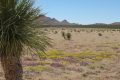
Themed Collection on North American Drylands
2026 Photo Contest
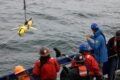
Lessons Learned from Spending a Month at Sea
Young Voices of Science: 2026 applications open

Call for proposals: Global ILTER Activity 2026
Call for Proposals: 4th ILTER Open Science Meeting (OSM) 2027

Reminder: Synthesis RFP deadline September 16
LTER at ESA, 2026
Studying post-fire Snowpack at the H.J. Andrews Experimental Forest

2026 Site Exchanges Announced
