NSF Antarctic Artists & Writers at McMurdo Dry Valleys (MCM)
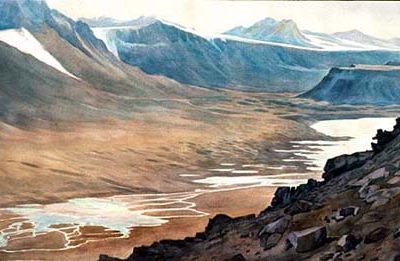
They also frequently collaborate with Antarctica-based members of the NSF Artists and Writers program. Other McMurdo arts and media collaborations can be viewed here.

Descriptions of arts and humanities projects at LTER sites. Used to assign posts to the the LTER arts& sciences page: https://lternet.edu/engaging-communities/lter-arts-sciences/
They also frequently collaborate with Antarctica-based members of the NSF Artists and Writers program. Other McMurdo arts and media collaborations can be viewed here.
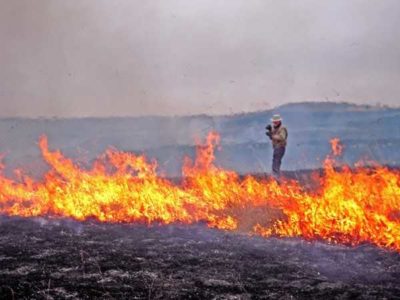
Kansas State University photographer Edward Sturr documented prescribed burns on Konza Prairie for a decade between 2001 and 2012, focusing on the dynamic and formal qualities of fire and how it interacts with the tallgrass prairie. Sturr’s photography has been combined with an article by John Briggs (former KPBS Director) and poems by KSU Professor… Read more »
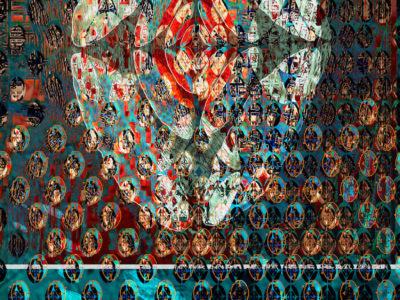
FCE LTEaRTs has an ongoing partnership with artist Xavier Cortada, the Tropical Botanic Artists Collective, and the AIRIE program (Artist in Residence in Everglades). Artists have worked with FCE scientists to produce over 20 exhibits since 2012 and professional development for teachers.
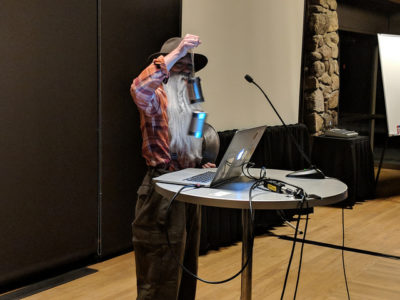
The All-Scientists’ Meeting only happens every 3 years. The workshops offer an amazing smorgasbord of fresh results, new theory, tools, and opportunities to make progress on old challenges. But as the organizing committee contemplated the 2018 All Scientists’ Meeting, we also wanted to create a space for the Network to look toward the future–a way… Read more »
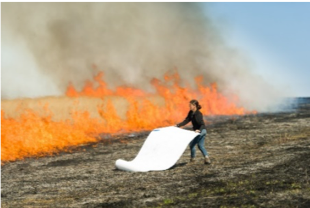
Fire is a natural force that has shaped grasslands for millennia, and it remains crucial for managing and conserving tallgrass prairie today. Fire also inspires and captivates the human spirit. Can grassland fires also be used to produce art? Erin Wiersma, Associate Professor of Art at Kansas State University, is exploring how recently burned prairie… Read more »
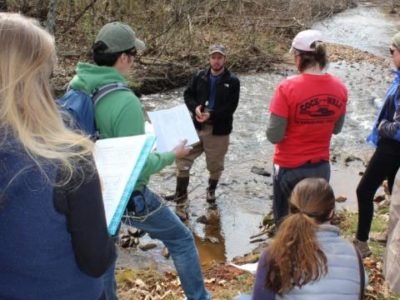
I flip open my copy of The Franklin Press while sipping coffee at a field station, and there, in a bi-monthly column, is an article by Coweeta Hydrologic Lab staff, answering the scientific questions of local citizens. The column is just one part of the Coweeta Listening Project (CLP), an initiative of the Coweeta LTER.
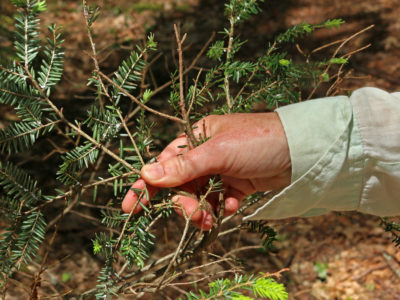
The hemlock is a native tree species that was once common from northern Alabama to Nova Scotia. Stretching tall with thick needles, the hemlock creates an entire ecosystem beneath its large branches. In the Smoky Mountains, its shade used to cool streams just enough to allow the eastern brook trout to thrive. Unfortunately, these hemlocks are in dramatic decline.
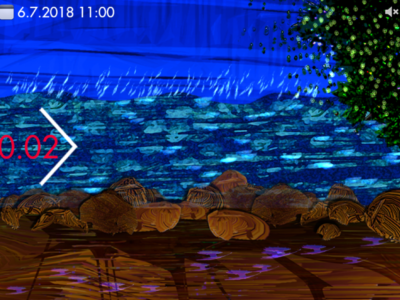
Envisioning Data at Hubbard Brook It’s not every day that you walk into a forest and find musical instruments set up carefully next to a gurgling stream. Yet melding art and science together is a regular part of the day-to-day operations at the Hubbard Brook Experimental Forest. Imagine the way that scientific data is normally… Read more »

Do arts and humanities programs at LTER sites further the Network’s mission? Recent research posits that art-humanities-science collaborations generate empathy – and associated emotions like inspiration, awe, and wonder – for the natural world. This empathy then drives society to engage with and care more broadly about nature.

A historian travels back a century into the cold, windblown Antarctic, landing at the edge of McMurdo Sound. A group of explorers recently returned to the coast recount their trip into a series of “curious” dry valleys, where the pervasive snow and ice encountered elsewhere on the continent is almost entirely absent. Forced to abandon… Read more »