Melissa Moore
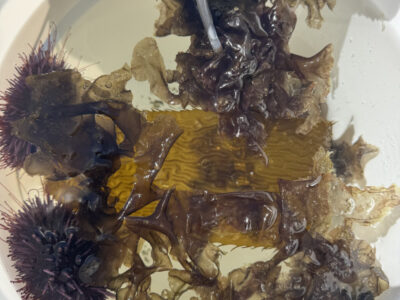
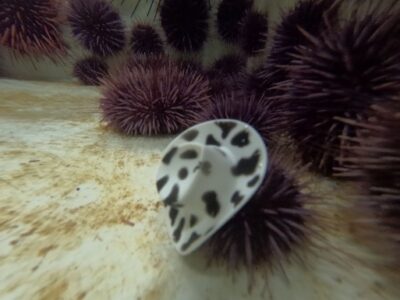
My students tested whether urchins kept indoors or outdoors consumed more kelp. The students got a taste of real, locally-relevant research directly connected to the work of the Hofmann Lab at UCSB.
My students tested whether urchins kept indoors or outdoors consumed more kelp. The students got a taste of real, locally-relevant research directly connected to the work of the Hofmann Lab at UCSB.
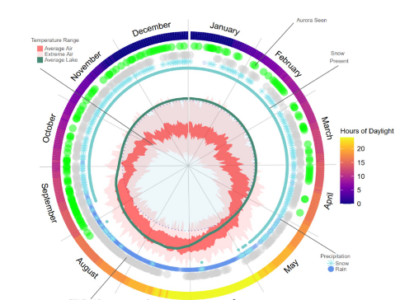
I fell in love with Amanda Young’s circle graph examples today. I saw them as awesome gateways for students to explore visual data in a new/more exciting/artsy way.
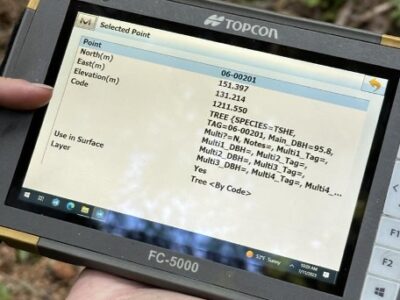
I translated these experiences into classroom lessons centered on data literacy, long-term datasets, and the realities of scientific research.
The biggest impact of this experience is in how I teach the process of science. While I was at the LTER, I spent a lot of time thinking about how science is long and messy. As teachers, we sometimes make the message too “clean” to make a main point – but it’s critical that students grapple with the mess!
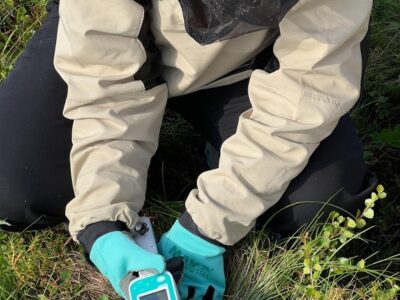
…what was so special about this program was that it introduced me and my students to a place in the world we had once considered foreign, unfamiliar, and completely abstract. It also allowed me to connect this place to our own backyard.
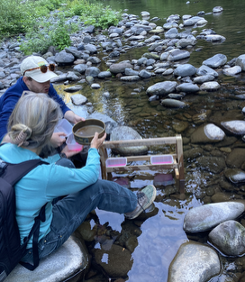
My two years as an ARETS Fellow profoundly changed how my students and I talk about science, approach a question, work together, look for evidence, and most importantly, pick up the pieces when our preconceived ideas are incorrect and comb through our data and ask another question.
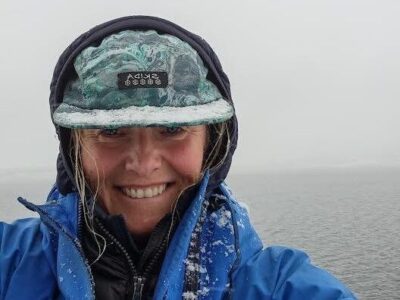
My summers at Toolik Field Station reaffirmed a simple truth: teaching and research are intertwined. Authentic field experiences can transform educators and students alike, inspiring curiosity, critical thinking, and a lifelong passion for discovery.
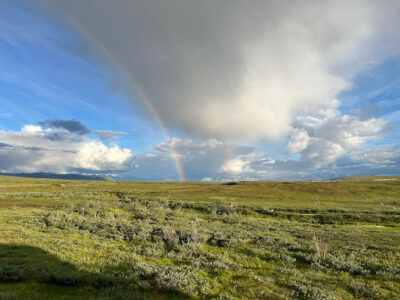
As a teacher, students often think we ‘know’ everything or should be able to explain every possible question they pose. It was refreshing to remember how science begins with ‘not knowing’. This renewed appreciation for the process of inquiry, that science is a way of asking about the world around us, was a humbling encounter.
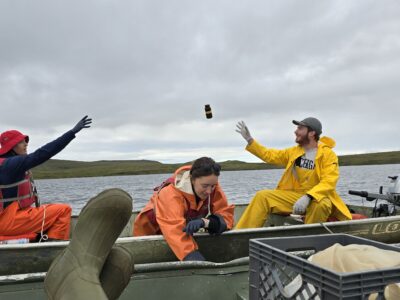
In 2024, we invested in people, in science, and in our ability to impact others. We hope we will carry this momentum into the next decade.
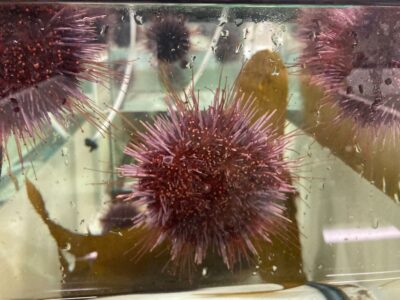
As part of a multi-site Research Experience for Teachers (RET) program, two science teachers, Emily Chittick and Traci Kennedy, from Milwaukee Public Schools, conducted an experiment to see whether warmer water temperatures affected the ability of sea urchins to flip themselves over after being turned upside down. They wrote up this part of their summer… Read more »

Data Nuggets, operated by the KBS LTER, started its third round of funding from the National Science Foundation to improve data literacy in K-16 students.
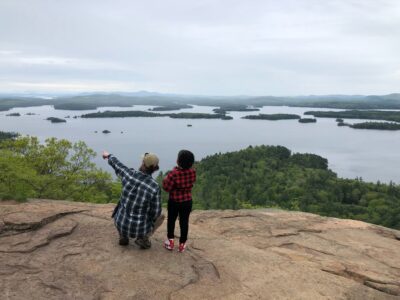
Welcome to the Woods aims to at introduce political refugees to the natural features of their new home at the Hubbard Brook LTER.