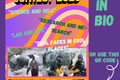
Let’s CHAT about Improving REU Programs

Many scientists have pivotal experiences during their undergraduate education that lead them to choose a career in science, such as opportunities to conduct hands-on research or work closely with mentors. Unfortunately, it’s a challenge to measure the direct impact these foundational experiences have on participants. In a new paper, however, researchers from Harvard Forest LTER… Read more »

New Toolkit from CAISE on Inclusion in STEM

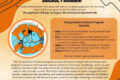
Informal Science (formerly the Center for the Advancement of Informal Science Education) has released a new toolkit: Broadening Perspectives on Broadening Participation in STEM. Key practice briefs, such as these on Cultural Norms of STEM and Modeling Workplace Inclusion serve as discussion-starters for identifying the issues and solutions for each site. Find information on this and many other resources for increasing… Read more »

Webinar series on 21st century field education

Fiona Jevin in the field at Harvard Forest in 2010.

The Undergraduate Field Experiences Research Network (UFERN) is pleased to announce a new webinar series focused on 21st century field education. The webinar series will bring expertise to our discussions and thinking that support the goal of UFERN by moving field learning experiences into the 21st century. Please join us for the first webinar in this series… Read more »

Into the Woods and Back Again: Former Harvard Forest REU Student Fiona Jevon Returns to Mentor New Undergrads
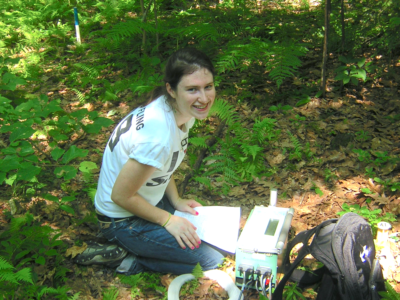
Fiona Jevin in the field at Harvard Forest in 2010.

Every summer, NSF funds research opportunities for undergraduate students at many LTER sites across the country. These Research Experiences for Undergraduates (REUs) expose students, often for the first time, to the world of ecological research through meaningful participation in ongoing research projects and tutelage under faculty. For many students, a summer spent participating in an… Read more »
LTER Road Trip: Science and Education on the Water

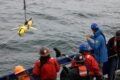
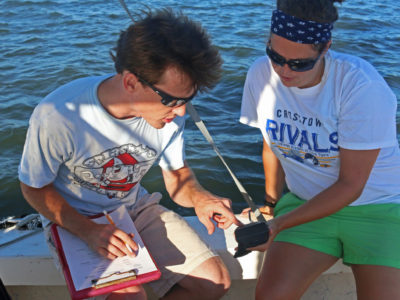
Every month, Field Technician Tim Montgomery loads his equipment onto a center console motorboat and heads off into the marshes surrounding Sapelo Island, Georgia. Over the course of several hours, he stops at multiple sites to check on the Georgia Coastal Ecosystem LTER network of data loggers continually collecting water quality parameters as they gently bob in the water. On one particular morning, I had the opportunity to go with him.

LTER Road Trip: The Georgia Coastal Ecosystem Schoolyard Program

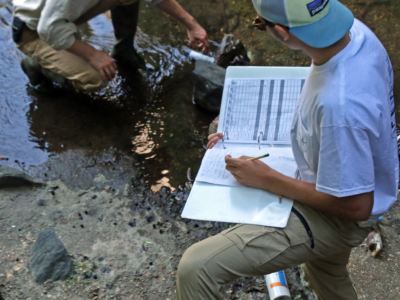
Research Technician Tim Montgomery records water quality data with a teacher during the GCE schoolyard summer workshop.

During their week out at the University of Georgia Marine Institute on Sapelo Island, teachers divide their time between assisting with research in outdoor settings alongside GCE scientists and graduate students and discussing the implementation of the information and experiences into their own teaching settings.

LTER Road Trip: Teaching the Next Generation of Ecologists

Nate Vandiver has now experienced fieldwork first-hand, a memory he can take to his environmental studies courses in college.

Nate Vandiver arrived at the Baltimore Ecosystem Study (BES) offices early on a Friday morning. Pulling on knee-length boots over his long work pants, he helped gather sampling equipment and load it into a van for a day of stream monitoring. Vandiver is a high school senior at the Friends School of Baltimore, and at… Read more »

2017 REU opportunities

NSF funds a large number of research opportunities for undergraduate students through its Research Experiences for Undergraduates (REU) Sites Program. The REU program allows for active research participation by undergraduate students in any of the areas of research funded by the National Science Foundation. Each student is associated with a specific research project, where he/she… Read more »

Baltimore Public Schools to Incorporate BES Science

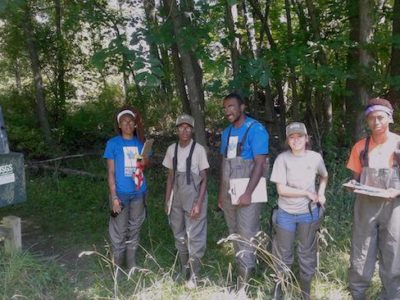
studnets in field gear and notebooks

The Baltimore Ecosystem Study will be incorporating LTER data into Baltimore Public Schools chemistry curriculum. The newly designed Integrating Chemistry and Earth science (ICE) unit infuses Earth science into chemistry at the high school level; it will be taught to every student taking chemistry this year. ICE aligns with the Next Generation Science Standards (NGSS),… Read more »