
Search
2015.
“Diel cycles in the fluorescence of dissolved organic matter in dystrophic Wisconsin seepage lakes:Implications for carbon turnover”
60: 482.
2015.
“Long-term monitoring reveals carbon-nitrogen metabolism key to microcystin production in eutrophic lakes”
6: 1-12.
2015.
“A method for estimating a bulk diffuse attenuation coefficient (Kd) from paired temperature sensors”
12: .
2015.
“Microcystin mcyA and mcyE Gene Abundances Are Not Appropriate Indicators of Microcystin Concentrations in Lakes”
10: 1-18.
2014.
“Drought-driven lake level decline: effects on coarse woody habitat and fishes”
71 (2): 315-325. doi:10.1139/cjfas-2013-0451. http://www.nrcresearchpress.com/doi/abs/10.1139/cjfas-2013-0451#.VKctUXtexzw.
2014.
“Quantifying lake allochthonous organic carbon budgets using a simple equilibrium model”
59: 167-181. doi:10.4319/lo.2014.59.01.0167. http://aslo.org/lo/pdf/vol_59/issue_1/0167.pdf.
2014.
“Spatial Variation as a Tool for Inferring Temporal Variation and Diagnosing Types of Mechanisms in Ecosystems”
9 (2): 1-11. doi:10.1371/journal.pone.0089245. http://www.plosone.org/article/info%3Adoi%2F10.1371%2Fjournal.pone.0089245.
2014.
“Successful enrichment of the ubiquitous freshwater acI Actinobacteria”
6: 21-27. doi:10.1111/1758-2229.12104. http://onlinelibrary.wiley.com/doi/10.1111/1758-2229.12104/full.
2014.
“Oscillatory dynamics do not mask linear trends in the timing of ice breakup for Northern Hemisphere lakes from 1855 to 2004”
124: 835-847.
2014.
“Closing the data life cycle: using information management in macrosystems ecology research.”
12: 24-30.
2014.
“Comment on Bachmann et al.: A non-representative sample cannot describe the extent of cultural eutrophication of natural lakes in the United States”
59: 2226–2230.
Top Stories
Natural Areas Conference Call for Proposals

Request for Synthesis Proposals 2026
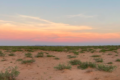
Hunting for Biocrusts: The living skin of the earth
Our second summer, we were not evacuated!

2026 Synthesis Skills Course Opens

Site Exchanges 2026

Permafrost and Passion: How Two Summers in the Arctic Reignited My Love for Teaching
Bringing seeds of wonder and curiosity from the Arctic Circle to a Minnesota Classroom
LTER Community Call: Site Exchanges
The Forest Data Jam theme is "water and climate"
