shore_small
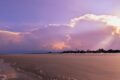
The repeat photography station on the Eastern Shore of the Virginia Coast Reserve captures vegetation changes along the waterfront throughout the year.

The repeat photography station on the Eastern Shore of the Virginia Coast Reserve captures vegetation changes along the waterfront throughout the year.
Repeat photography stations are designed to capture change throughout the year. This station, trained on an oyster reef at the Virginia Coast Reserve, is beginning to show the reef growing, along with capturing a huge range of environmental variability through the year.
A humpback rises before the RV Laurence M. Gould in the Antarctic. Icebreaker ships like this can’t get close to South American humpbacks, and as a result tagging the whales is an involved process. Photo captured under the following permits: NMFS 14907, 14809, 14856; ACA 2009-013 and 2015-011. Shared with permission from the Palmer LTER.
All sixteen recorded satellite tracks of South American humpbacks, overlaid. Used with permission from Modest et al., 2021.
The Warming, El Nino, Nitrogen Deposition Experiment at the Sevilleta (SEV) LTER.
The Rainfall Manipulation Plots (RaMPs) at the Konza Prairie (KNZ) LTER.
Brigham prepares a PCR reaction to amplify the DNA extracted from the soil microbial samples.
Researchers at the Niwot LTER collect data at their study plots.
Sand hoppers, crustaceans that spend the majority of their lives on the sand, swarm a giant kelp blade. Beached kelp is their main source of nutrition, and less nutritious kelp might have severe repercussions for beach communities.