Lessons Learned from Spending a Month at Sea
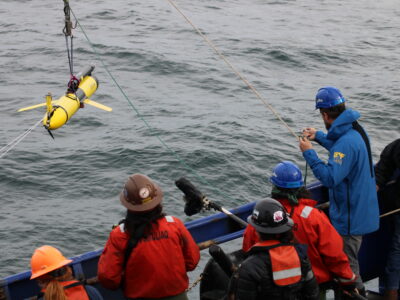
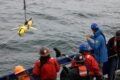
A common misconception is that an oceanographer’s field days exclusively involve diving in brightly colored coral reefs in crystal-clear waters.
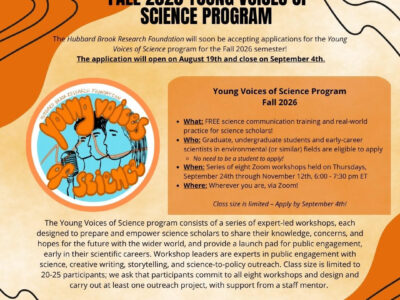
The application period for the Fall 2026 Young Voices of Science Program runs Wednesday, August 19th to Friday, September 4th. No need to be a student to apply! The Young Voices of Science program consists of a series of expert-led workshops, each designed to prepare and empower science scholars to share their knowledge, concerns, and… Read more »
The International LTER Network (ILTER) has opened the first-stage call for its first globally coordinated research activity, which will bring together official ILTER sites in a shared ecological study. Teams from within or outside the ILTER network are invited to propose a scientifically meaningful topic and a simple, standardized protocol that can be implemented across… Read more »
The 4th ILTER Open Science Meeting (OSM), themed “Unity in Diversity: Celebrating Long-term Resilience Across Connected Ecosystems and People,” will take place March 8-12, 2027, in Bariloche, Argentina. Co-hosted by the University of Buenos Aires, INTECOL, and other Argentinian partners, this flagship event will bring together the global ILTER community to exchange knowledge and strengthen… Read more »
The Long Term Ecological Research (LTER) Network Office seeks proposals for synthesis working groups that incorporate LTER data (accessible at https://edirepository.org/) and science. Two to four groups will be funded to meet three times over two years at the National Center for Ecological Analysis and Synthesis (NCEAS) and will receive dedicated support from an LTER data… Read more »
The LTER Network always puts in a strong showing at the Ecological Society of America Annual Meeting and 2026 is no exception. Please use and share our day-by-day list of LTER and related events to find your footing at this fun and approachable meeting. If you don’t see your talk or session listed below, please… Read more »
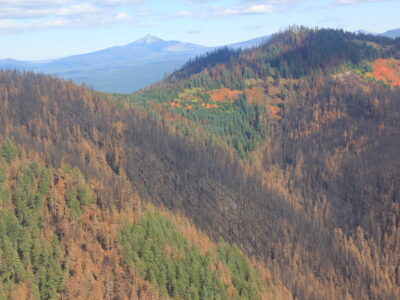
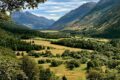
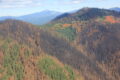
As wildfires continue to reshape forested landscapes across the western United States, understanding their impact on snowpack and hydrologic systems is increasingly important.
Site exchanges are designed to facilitate between-site comparisons and support the development of cross-site projects. The 2026 awardees exemplify a variety of approaches to such collaboration, including: shared sampling efforts, development and dissemination of new methods, collaboration on shared best practices, and work toward joint publications.
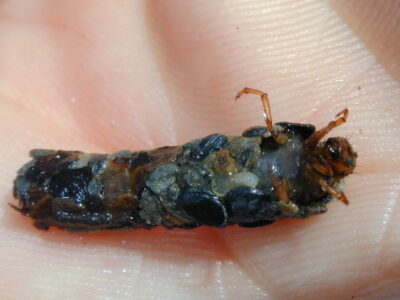
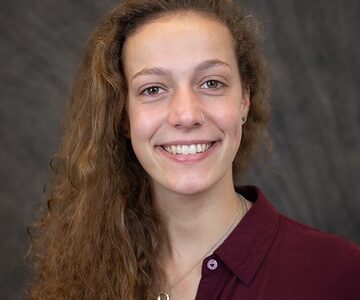
Caroline McCoy’s two-years as an ARETS Fellow impacted and expanded her approach to teaching science profoundly. I was inspired to learn more and it was the caddisfly that stole my heart. The caddisfly would end up becoming front and center in the lesson plan I would be writing.
Doctoral student Shirah Strock will travel from the Virginia Coast Reserve (VCR) LTER to the Santa Barbara Coastal (SBC) LTER. She will receive hands-on training in ViQi, an AI platform used to quantify sessile organism (algae, invertebrate) recruitment from long-term benthic imagery.
Lin Hou, A PhD student at the California Current (CCE) LTER site, will visit the Northeast Shelf (NES) LTER to refine her Imaging Flow Cytobot (IFCB) analysis techniques, drawing on approaches used in the Sosik lab at Woods Hole Oceanographic Institution.
Dr. Nicholas Medina will travel to the Minneapolis-St. Paul (MSP) LTER and sample soils for eDNA extraction and ITS sequencing. The results will complement MSP data on tree distribution, soil nutrients, heavy metals, and earthworms, while expanding Nicholas’ work on the temporal dynamics of mycorrhizal fungal exploration traits.