Excess Nutrient Pollution Sends Salt Marsh Microbes into Dormancy
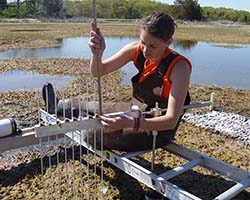
A recent experiment examined the impacts of increased nitrogen on salt marshes—and the all-important microbes within them.

A recent experiment examined the impacts of increased nitrogen on salt marshes—and the all-important microbes within them.
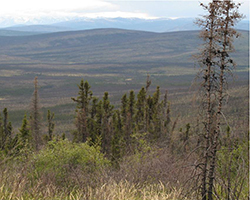
Each forest reflects a legacy of past disturbances—from the literal detritus left behind a storm or fire to the prominence of particular species traits that enable species to bounce back after a specific type of disturbance.

How can researchers project the ways in which land-use changes will affect ecosystem services when they don’t yet know what course development will take? Integrated scenario analysis models several possible trajectories to examine the interactive effects that land-use change could have on ecosystem structure and function.
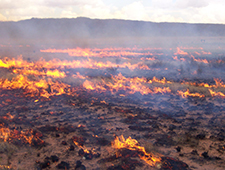
What information is needed to predict where fires will start in desert grasslands and how big they will get? Soil type turns out to play a larger role than expected.
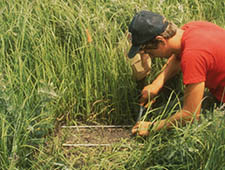
Nitrogen enrichment can dramatically change the existing environment for plants and typically leads to increased productivity, decresed diversity, and shifts plant community composition. But what mechanisms are responsible for these changes? Researchers designed a multi-site experiment to find out, experimentally manipulating each of three possible drivers across mesocosms of three ecosystem types (tall grass prairie, alpine tundra, and desert grassland).
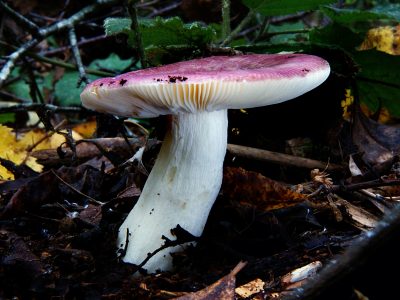
New analyses demonstrate that long-term nitrogen enrichment substantially changes the community composition of soil fungi in a temperate hardwood forest. The mix of fungal taxa that emerges appears to be better able to tolerate high nitrogen but less able to break down the lignin in organic matter, which contributes to an overall accumulation of soil carbon.
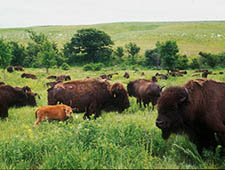
Ecologists know that nitrogen, phosphorus and leaf area play key roles in the productivity of plant communities. But how tightly are they tied together? And are those relationships sustained over different types of landscapes? A recent study of tallgrass prairie communities, building on a previous study of arctic tundra, found leaf area index (LAI) to be strongly correlated to both total foliar nitrogen and total foliar phosphorus in several plant functional types (grass, forb, woody, and sedge) and grazing treatments (cattle, bison, and ungrazed).
How sensitive are coastal ecosystems to sharp changes in temperature? Using a detailed spatial analysis in the Florida Everglades, researchers found that cold snaps reduced ecosystem productivity most dramatically in areas with low water levels that were located away from the coast. With more extreme weather events predicted in the future, knowing the likely effects of low temperature events on subtropical wetlands systems can inform management of these important ecosystems.

In stratified lakes, a large portion of phytoplankton biomass is found—not at the surface, where sampling is easiest—but somewhere down the water column, in what is known as a subsurface chlorophyll maximum (SSCM). Researchers in Global Lake Ecological Observatory Network (GLEON) compared automated high-frequency chlorophyll fluorescence (ChlF) profiles with surface samples and discrete depth profiles. In 7 of the 11 lakes studied, automated sampling captured the presence of SSCM’s that would have been missed by conventional sampling.
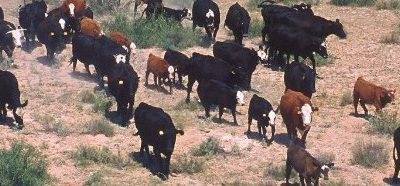
How-and when-do ecosystems change character? Are those shifts reversible? And what signs might precede them? Such questions are hard enough to answer in a single place. One might think that incorporating different kinds of ecosystems would only complicate the problem. But a group of scientists in the Long-Term Ecological Research Network is finding a remarkably consistent pattern by combining models and data across several long-term ecological experiments.
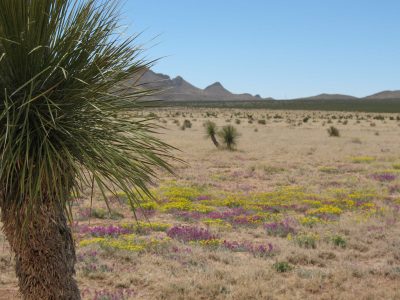
Novel ecosystems can emerge through many kinds of changes, including changes in mean climate, species invasions, and increased or decreased variability. Researchers at Jordana Basin LTER have highlighted the role of interannual climate variability in changing the outcome when an exotic grass species invades dry shrubland. Using a process-based model, they predicted three outcomes, depending on the degree of variability and timing relative to invasion.
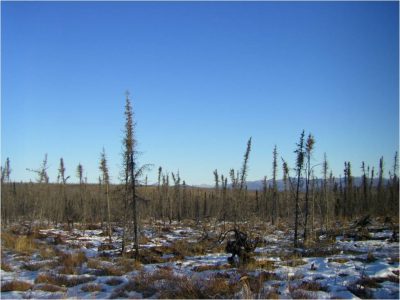
Climate-change is predicted to have a larger impact on Arctic regions than on temperate ecosystems. As a result, rural communities relying on local wild resources, or subsistence harvesting, are vulnerable to climate-change-induced environmental trends affecting the availability of fish, waterfowl, and other key resources.