
Ecosystems ecology, landscape ecology, macrosystems ecology. It’s easy to think of these subdisciplines as big, bigger, biggest—but there’s a good deal more to the distinction than the scale of interaction they address. A recent “Idea and Perspective” article in Ecology Letters traces the origins and foundations of the field of macrosystems ecology, and advances a new hypothesis to describe how anthropogenic influences change the scales of ecological processes.
Search Results for: node
LTER Science Update Newsletter | March 2017
In March, the Science Update Newsletter covers: Announcements of three new LTER sites and the NSF symposium a HFR-LTER paper in Ecology on the influence of excess nitrogen on fungal decomposition (spoiler — it slows decomposition) a BES-LTER paper in Landscape Ecology on evolving paradigms of urban ecology a KBS-LTER study, published in Royal Society Open Science, on… Read more »
News from the NCO: 2017 Winter
January 18, 2017 Synthesis The review committee recommended two Synthesis Working Group proposals for funding in the current round. Congratulations to Forest Isbell, Jane M. Cowles, and Laura Dee who will lead Scaling-up productivity responses to changes in biodiversity and Lauren Hallett, Daniel Reuman, Katharine Suding for Synthesizing Population and community synchrony to understand drivers of… Read more »
The Small Island of Braila
By Jen Holzer, Technion Socio-Ecological Research Group After three days in and around Tulcea, we journeyed by car to the City of Braila, a city of about 200,000, famous as a node for the textile, shipbuilding, and shipping trades, and a surprisingly underdeveloped tourism industry. When our hosts told us this was not a travel… Read more »
2013 LTER mini-symposium to be webcast
The 2013 LTER mini-symposium themed on "The Globalization of Long Term Ecological Research" at the National Science Foundation in Washington, DC., on Thursday, February 28, will be broadcasted live on the web beginning 8:30 a.m. Eastern Standard Time. The live webcast, a joint effort between the LTER Network Office and NSF can be viewed at… Read more »
Develop an LTER NIS Best Practices for Designing and Writing Workflow Scripts in the PASTA Framework. February 20 – 27, 2012.
Products:
Guide to accessing data in the NIS via the provided webservices: http://im.lternet.edu/sites/im.lternet.edu/files/NISdataworkflowsbestpractices0.1.pdf
Three screen casts depicting the development of workflows for accessing data in the NIS with R, Matlab, and Kepler: http://mtsms.unm.edu/Mediasite/Catalog/Full/cf020feb9c6a4222a57d8daa334f7e3521/b671822aa4c04e6caa5d2157a55da6e514/cf020feb9c6a4222a57d8daa334f7e3521/?state=GHrbcctw5uPTuUXj0ogE
Page Not Found (404 error)
Dr. Elanor Bell and student Eric Bottos retrieve cultures of C. raudensis from Lake Bonney in the McMurdo Dry Valleys during early winter. (Amy Chiuchiolo, Montana State University). MCM LTER. The requested page could not be found. We recently completed a site redesign. Some of the old content was moved, and some removed in order… Read more »
Using LTER Data
The LTER Network makes data available online with as few restrictions as possible. LTER data is reviewed for errors and inconsistencies and thoroughly documented so that it can be incorporated into broader comparative and synthetic studies. LTER Information Managers, stationed at each LTER site, work to ensure that LTER data is reviewed for errors and inconsistencies… Read more »
Writing a Data Management Plan for your NSF Proposal
The National Science Foundation (NSF) has made good the announcement in last May’s press release to require a data management plan with every NSF proposal. You will be happy to know that writing a data management plan is not difficult. While constructing the text to meet the NSF requirements does demand some attention to detail,… Read more »
Network Office holds workshop on software tools for sensor networks
In early May, the LTER Network Office organized a training workshop on “Software tools for Sensor Networks” that was attended by 24 trainees, 10 trainers and speakers, and a diverse mix of researchers, graduate students, information managers, and other skilled professionals. The training was cost-shared among the LTER Network Office, the National Center for Ecological… Read more »
For Researchers and Students
The following links are for researchers and students who are interested in information on the LTER including research opportunities, collaboration opportunities and general information about the LTER Network:
Site Characteristics Climate and Productivity Table
LTER Site Characteristics Table: climate and productivity
Click on column headers to sort by that column, Mouseover headers and values for sources and additional information, and click csv to download data
| Site Name | Ecosystem | Longitude | Latitude | Elevation (m) > | Mean Annual Temperature (C) | Mean Annual Precipitation (mm) | AET (mm/yr) | PET (mm/yr) | Drought Index | ANPP (gm C/m2) | Growing Season (days) |
 |
|
 |
|
|
|
|
|
|
|||
| |
Top Stories
Global, All-Virtual Ecology Conference
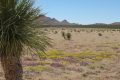
Themed Collection on North American Drylands

2026 Photo Contest

Lessons Learned from Spending a Month at Sea
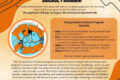
Young Voices of Science: 2026 applications open

Call for proposals: Global ILTER Activity 2026

Call for Proposals: 4th ILTER Open Science Meeting (OSM) 2027

Reminder: Synthesis RFP deadline September 16

LTER at ESA, 2026
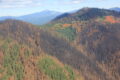
Studying post-fire Snowpack at the H.J. Andrews Experimental Forest