Executive Board
Leadership in the LTER Network is distributed, with one-third (1/3) of site principal investigators serving staggered three-year terms on the Executive Board at any given time. Each year, the Executive Board elects a chair-elect from within the current membership, with the chair-elect advancing automatically to chair in the following year.
Chair of the LTER Executive Board

Dr. Michael Gooseff, Chair (2026-2027)
Dr. Micahel Gooseff is Lead Principal Investigator of the McMurdo Dry Valleys LTER and a Fellow of the Institute of Arctic and Alpine Research (INSTAAR) and a Professor in the Department of Civil Architectural & Environmental Engineering at the University of Colorado. He is currently the Associate Dean for Research for the College of Engineering and Applied Science, and a co-Director of the Hydrologic Sciences Graduate Program at CU.
Mike conducts on-going research in Arctic Alaska, mostly from the Toolik Field Station and continues research in Antarctica. In Colorado, he also conducts research on the Colorado and Gunnison Rivers.
Dr. Michelle Mack, Chair-elect (2026-2027)
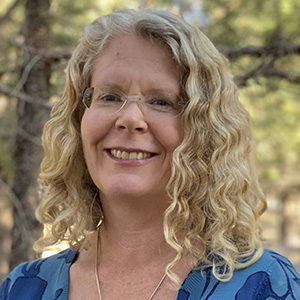
Dr. Michelle Mack is the lead PI of the Bonanza Creek LTER located in the Alaskan boreal forest and Regents’ Professor of Ecosystem Ecology in the Center for Ecosystem Science and Society (ECOSS) at Northern Arizona University.
Michelle’s research includes understanding fire regimens in the boreal forests and the Arctic tundra of North America, analyzing thawing permafrost soils in Siberia, working with huge trees in tropical wet forests of Costa Rica and Panama, and studying savanna ecosystems in South Africa.
Network Office
Dr. Ben Halpern, Executive Director

Dr. Ben Halpern is the Executive Director of the LTER Network Office and the Executive Director of the UCSB National Center for Ecological Analysis and Synthesis (NCEAS) in Santa Barbara and a professor at the Bren School of Environmental Science & Management at the University of California, Santa Barbara.
Ben sets the vision and programmatic direction for NCEAS. His research interests are primarily in marine ecology and conservation planning, but span a wide range of disciplines. He has led several research initiatives that have influenced ocean management, including a global analysis of the effectiveness of marine protected areas (MPAs), a global assessment of the cumulative impacts of human activities on oceans, and the development and global application of the Ocean Health Index.
Marty Downs, Director
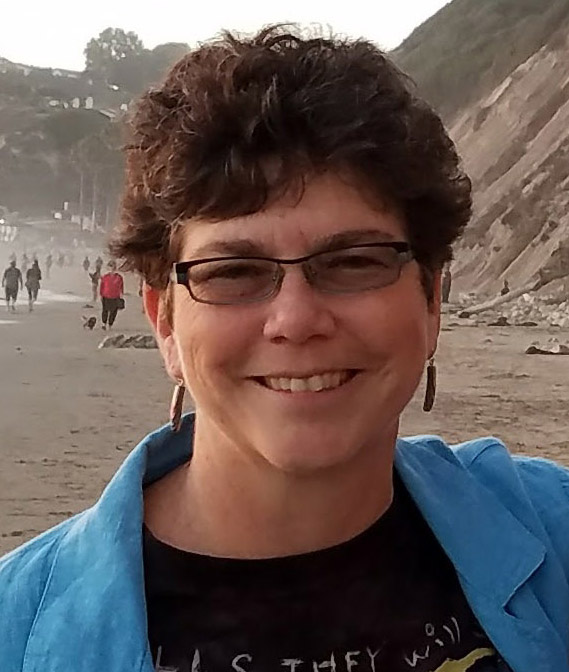
Marty Downs directs daily operations of the LTER Network Office, coordinating scientific synthesis, education, and engagement activities at the Network level.
Since 2005, she has managed collaboration, communications, and outreach in environmental and public health organizations, including Brown University’s Environmental Change Initiative (now the Institute at Brown for Environment and Society) the New England Aquarium, and the Nature Conservancy, where she led the Science Impact Project, a professional development program for Nature Conservancy scientists. As a science journalist, she has written for the Chronicle of Higher Education, Technology Review, the news section of Science, and produced news and commentary for public radio. Marty began her career as an ecologist, investigating plant-soil-atmosphere interactions in temperate forests, subarctic forests, and Arctic tundra. Marty earned her B.S. in Natural Resources from Cornell University and her M.S. in Science Journalism from Boston University. View her research publications on ORCID.