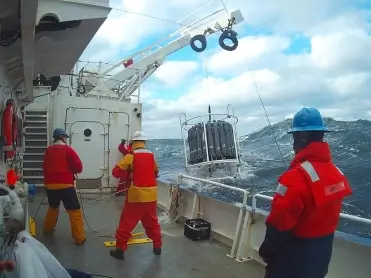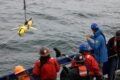
Abundance and Biovolume of Taxonomically-Resolved Phytoplankton and Microzooplankton Imaged Continuously Underway with an Imaging FlowCytobot Along the NES-LTER Transect in Winter 2018
https://edirepository.org/featured/featured-20200501.00
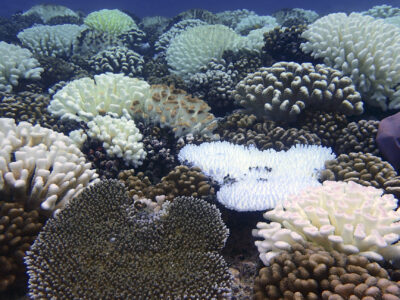
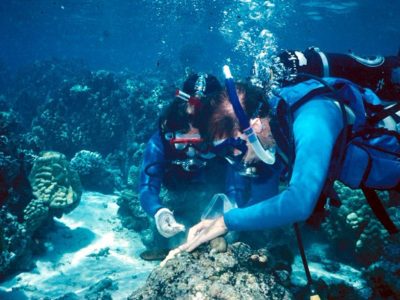
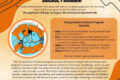
by Jannine Chamorro, Moorea Coral Reef LTER Last September I had the opportunity to participate in a project studying coral bleaching in Mo’orea, French Polynesia. This was the first time I had ever worked in a remote field location. While initially the thought of flying to a place I could not see on a map… Read more »
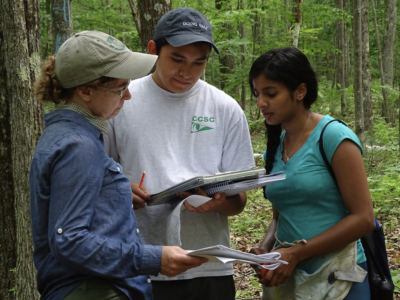
LTER sites preset extraordinary opportunities for undergraduate and graduate students to learn about the process of science — and to discover whether their strengths and interests fit the demands of field ecology. Russell Schmitt and Sally Holbrook discuss how the Moorea Coral Reef site mentors undergraduate students and the rewards of the experience.
[vc_row][vc_column][vc_single_image image=”81860″ img_size=”large” alignment=”center”][vc_column_text] April 2020 LTER Network News is a forum for sharing news and activities from across the LTER Network. This is our water cooler. If you have personnel changes, new grants, or cross-Network activities that might interest your LTER colleagues, please send them along to weiss@nceas.ucsb.edu.[/vc_column_text][vc_text_separator title=”Announcements” color=”peacoc” border_width=”6″][vc_column_text] This Friday, April… Read more »
Many ecologists are now faced with a choice: continue field measurements and manipulations or halt them voluntarily and accept the cost to their science and sometimes their budgets. the LTER Network Office offers some considerations for those faced with this difficult decision.
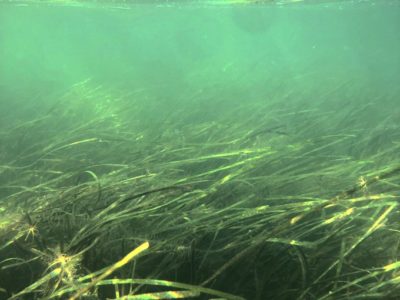
As anthropogenic carbon dioxide emissions continue to increase, scientists have now recognized seagrass meadows—which typically have high rates of carbon storage—as important ‘blue carbon’ sinks. However, rising ocean temperatures threaten seagrass meadows, along with their ability to retain carbon. This underlines the need for precise ecosystem data on the vulnerability and resilience of these meadows… Read more »
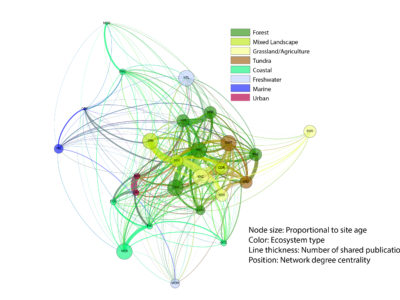
A recent analysis of collaboration in the LTER Network reveals that LTER-related publications involve more collaborators, more institutions, persist for longer, and cover greater distances than other publications in the field of ecology.
Many scientists have pivotal experiences during their undergraduate education that lead them to choose a career in science, such as opportunities to conduct hands-on research or work closely with mentors. Unfortunately, it’s a challenge to measure the direct impact these foundational experiences have on participants. In a new paper, however, researchers from Harvard Forest LTER… Read more »
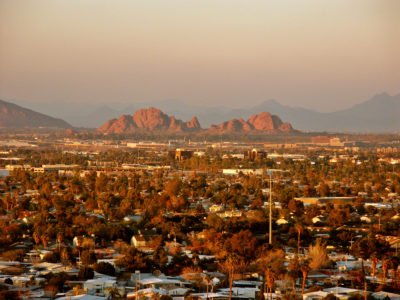
Credit: CAP-LTER. CC BY-SA 4.0 Anticipating the needs of cities in the future is a key aspect of urban sustainability. One approach to planning for sustainable cities is for researchers and practitioners to work together to develop scenarios that benefit communities as well as ecosystems. Central Arizona Phoenix LTER (CAP LTER) is taking an innovative approach… Read more »
[vc_row][vc_column][vc_single_image image=”81860″ img_size=”large” alignment=”center”][vc_column_text] February 2020 LTER Network News is a forum for sharing news and activities from across the LTER Network. This is our water cooler. If you have personnel changes, new grants, or cross-Network activities that might interest your LTER colleagues, please send them along to weiss@nceas.ucsb.edu.[/vc_column_text][vc_text_separator title=”Announcements” color=”peacoc” border_width=”6″][vc_column_text] Openings for EDI… Read more »
In 2017, the LTER Network saw the addition of three new marine and coastal sites. The new sites—Northeast U.S. Shelf (NES), Northern Gulf of Alaska (NGA) and Beaufort Lagoon Ecosystems (BLE)—are all well-represented among the 41 talks and posters presented by LTER researchers at the 2020 AGU Ocean Sciences Meeting. Presentations from these and other… Read more »
The LTER Network Office announces new synthesis project awards: A global synthesis of multi-year drought effects on terrestrial ecosystems; A multi-biome synthesis investigating the controls on river Si exports; and Ecological Metagenome-derived Reference Genomes and Traits (EMERGENT).